Skip to content

The history of The Club

The Caravan Club was founded in 1907, "to bring together those interested in van life as a pastime…to improve and supply suitable vans and other appliances….to develop the pastime by collecting, publishing and supplying to members, books and periodicals and lists of camp sites etc… to arrange camping grounds".

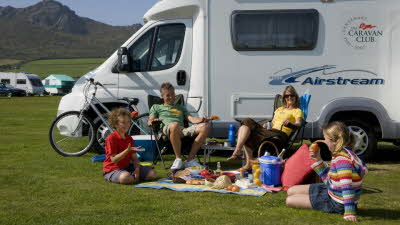
Over 100 years later, The Caravan Club provides almost 375,000 member households with access to nearly 3,000 locations, as well as access to its vast storehouse of knowledge and expertise in how to make the most of caravanning as a leisure pastime.

Today it still promotes and connects those interested in caravanning.

Timeline:

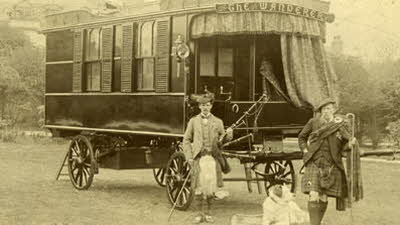
1885: The first purpose-built touring caravan, The Wanderer, is produced to the design of Dr William Gordon Stables, an inspiration behind the founding of The Club.

1907: On 14 June 1907, The Caravan Club of Great Britain and Ireland is founded at 72 Stamford Brook Road, London, the home of J Harris Stone.

1908: The Club holds its inaugural AGM at the Whitehall Rooms in London on 19th February. In May, The Club's first rally was held in a meadow in Ockham, Surrey.

1909: The Club stages a second rally in June, at the Berkeley Arms Hotel at Cranford Bridge, near Hounslow. Membership reaches 157.

1910: In June, Cane Hill in Coulsdon, Surrey, becomes the third stop on the rally calendar.

1912: While The Club was founded by ten men and one woman, within only five years women accounted for nearly one third of The Club's 267 members. By the annual Dinner in June, The Club had hosted 13 rallies and 30 Council meetings since inception, and The Club could boast a total of 450 pitches in the UK and Ireland - Sussex led the way with 51.

1913: The Ipswich meet of The Caravan Club makes front-page news in the Daily Mirror.

1914: Wittensford in the New Forest and Mablethorpe on the north Lincolnshire coast become new rally destinations.

1915: The Annual Dinner is cancelled due to the First World War.

1916: At the AGM, the Council reports that Club members have provided caravans to the Red Cross in order to aid the War effort.

top

1918: Club members deliver fifty caravans within 24 hours to Field Marshal Haig, in order to aid mobile operations following the German withdrawal.

September 1918: Club founder J Harris Stone is owed more than £8 in expenses - the Club's coffers stand at just £3

May 1920: Whit Monday rally at Abbey Court in Kent is the last big gathering for 15 years

1921: A meet arranged at Cirencester Park is cancelled after disagreements over dates and only four applications

February 1922: Stone is the only attendee at a Council meeting

1932: The Club moves to new headquarters, at 140a Shaftesbury Avenue

1933: Membership of the Club drops to just 80 and Stone is running the Club almost single-handedly

September 1935: Mit Harris and Bernard Dolman take over the running of the Club

Early 1936: The first Centre - Northumberland and Durham - is started, thanks to the efforts of a Colonel H Millican

1936: The National Rally at Leamington Spa attracts 100 caravans

top

Mid-1937: Club membership stands at 1300 - over 1200 more than it boasted just four years previously

1938: The Caravan and Trailer magazine is bought by the Link House Group, and the Club re-establishes links with the magazine

1938: Some 181 outfits attend the National Rally at Warwick Castle - a record attendance for a club meet in Britain

Autumn 1938: A rally in Southport attracts 100 caravans and a great deal of interest from the non-caravanning public and press

1939: A record 201 outfits turn up for the National Rally near Northampton

1940: Delamere Forest, Cheshire, and Cheddar in Somerset are the last two rally destinations during the war years

June 1941: Club membership stands at 1729, with over 200 new members since the outbreak of the war

August 1941: The 100th edition of The Caravan magazine is issued

27 June 1945: The Scottish Caravan Club, which was founded in 1936, becomes the Scottish Division of The Caravan Club

1947: Membership stands at a very healthy 4200 and the Club boasts 13 Centres and Divisions

top

1947: Caravanners and the Club benefit from the Town & Country Planning Act

1952: HRH Prince Philip, the Duke of Edinburgh, appointed Patron

10 May 1955: The Club presents Prince Charles and Princess Anne with a fully-working miniature caravan

1956: West Runton (now known as Incleboro Fields) is the first site signed up under the Lease and Service Agreement system, whereby landowners allows the Club to lease their land at a peppercorn rent of £1 a year

August 1958: Thanks to the influence of Club secretary Donald Chidson, the towing speed limit is raised by 10mph to 40mph

31 December 1959: The Club regains its independence and officially becomes The Caravan Club

January 1963: The first issue of En Route, the Club's own magazine, is published

1967: A motion to allow motor caravanners to become members of the Club is carried

April 1968: Cooperative Woods (now Abbey Wood) is opened - it is the first large-scale municipal fully-equipped touring caravan and camping site in Britain

October 1975: The Club's moves it main office from Mayfair to its current location at East Grinstead House

1976: The Club buys Church Cove, at Landewednack in Cornwall, for the nation as part of the National Trust's Enterprise Neptune scheme, at a cost of £5000

1 May 1979: Mayday roadside assistance and recovery service is launched thanks to a collaboration with National Breakdown (Green Flag)

top

1980: The Club receives one of the Queen Mother¹s 80th birthday awards for its support of the Keep Britain Tidy Group

1981: Glanusk Park, in Wales, becomes the first venue outside England to host a National Rally

1982: The Wanderer makes appearances on two BBC1 TV programmes as part of the Club¹s 75th anniversary celebrations

1982: The miniature caravan presented originally to the royal family in 1955, was returned to Princess Anne for her children to enjoy

1982: A banquet at Guildhall, in the presence of Prince and Princess Michael of Kent, helps to mark the 75th anniversary

1983: Link House sells its remaining shares in the 1935 company to The Caravan Club Limited, ensuring the Club¹s total independence

1990: Bob Black begins his record-breaking reign as Club Chairman which he held for 17 years.

1997: The Club introduces a two-tier Council structure, comprising a smaller Club Council and nine Regional Councils

2004: Hillhead Club site re-opens, offering facilities more associated with commercial sites ­ it boasts a shop, restaurant and bar, recreation room and heated swimming pool

2006: Burrs Country Park opens, becoming the Club's first green field development for many years

2007: The Club celebrated its Centenary on 14th June 2007, with parties on every site and celebrations throughout the year. There was a garden party at Buckingham Palace and the 80th National Rally was held at Blenheim Palace. In October, Bob Black MBE stands down as Chairman and is replaced by Grenville Chamberlain.

2008: Poolsbrook Country Park Caravan Club Site officially opens as the 'greenest' caravan site development in the UK with a range of energy saving technologies including geothermal heat recovery, solar and photovoltaic panels, grey water recycling and wind turbine.  All technologies monitored for suitability for future site developments.

2009: With popularity of caravanning at an all-time high, The Club adds nine new sites to the network.  The Caravan Club archive at the National Motor Museum continues to grow with historical items on display alongside the miniature royal caravan, returned to The Club for safekeeping by HRH the Princess Royal.


top