

Cold comfort
Unless you’re the most fair-weather of fair-weather tourers, the ability to keep your leisure vehicle warm is a pretty key issue.
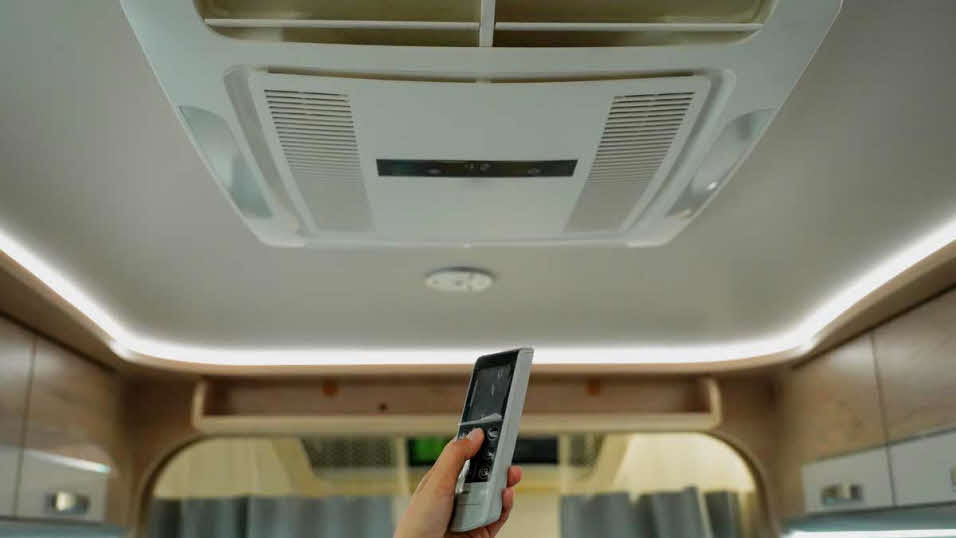
It’s interesting that when we judge vehicles for the Caravan and Motorhome Club Design Awards, the sophistication of the heating is one of the parts of the specification which makes the most difference between, shall we say, ‘economy’ models and ‘premium’ ones. Indeed, sometimes it's arguably the only substantive difference between lower and higher ranges, beyond some minor cosmetic improvements!
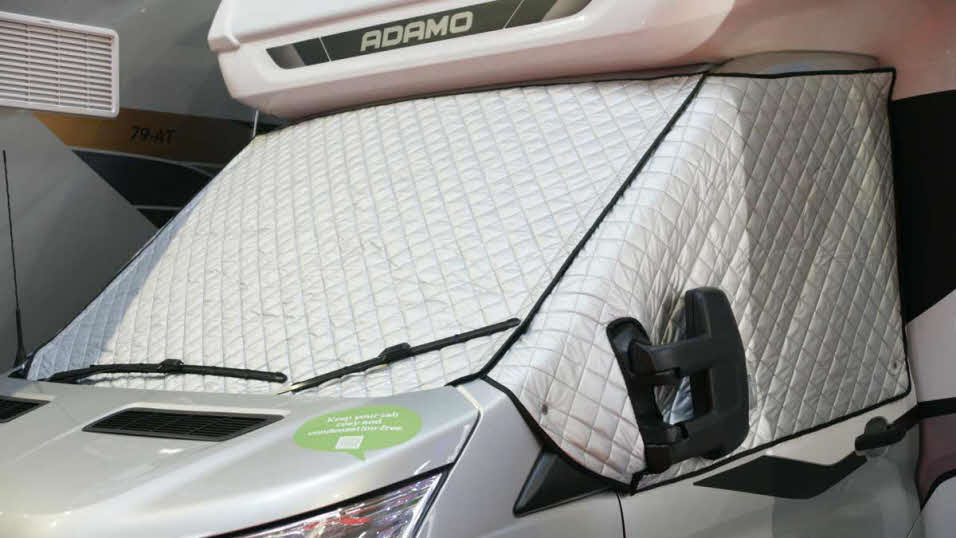
Insulated covers on your cab windows help keep warmth in, and mean your heater doesn’t have to work as hard
There are quite a few different types of heating system, with all having their merits. A very brief overview of the more common options is:
- No installed heating. The most basic of imported caravans and some campervans fall into this category. If mains electricity is available, perhaps the best way to heat these is with a ceramic heater - even a 500W one will be adequate in a small space. Whatever you do, though, don’t be tempted to use an unflued gas device(e.g. cooker, portable stove or cabinet heater) for space heating, as these can be very dangerous in a confined space
- Single point heating. Cheap and simple, this provides heat from one location, which will (hopefully) circulate around the rest of the habitation space. Clearly best suited to smaller spaces, there’s still a real risk of there being cold areas
- Blown air heating. A gas, electric or diesel (or combination of those sources) heater circulated air through pipes to a range of outlets at different points (usually including areas like the toilet compartment). The standard for lower and mid-range UK-market caravans and motorhomes for years, this system is reasonably effective, largely trouble free and relatively affordable
- Wet central heating. Widely seen by many owners as the indication of a premium model, this circulates heated fluid to small radiators all around the habitation space and gives a very controllable level of heating
All systems really have to do two things - heat up the habitation space when it’s too cold, then maintain a comfortable temperature. Doing that is a combination of the heater’s output, the size of the space, how well that space is insulated and how well controlled the heating is. Even a basic heating system in a small space will warm it quickly, and blown air systems are pretty good at raising temperatures fast too, while being better at achieving an even heat. Wet central heating is slower to warm up, but generally provides even, well-controlled temperature throughout the habitation space, so it's usually the best option for comfort once you’re warmed up.
Whichever system you have, learning to get the best from it is well worthwhile. That’s particularly true for the more sophisticated systems, which may have good thermostatic control, timer settings or even app-based remote operation. With a cosy duvet, you probably don’t need much if any heat overnight unless it’s really cold, but setting the controls to warm things up just before you get up is a really good idea. And if you can turn it on shortly before you get back after a winter walk, how nice is that? But even with basic systems, you can help the work more effectively. For instance, with a campervan or motorhome, using insulated screens over the glass cab windows can keep more heat in, while avoiding fully opening a large sliding door too often stops you losing all the warm air and having to reheat it all over again.
Last updated September 2025