

Mountain driving with a caravan
What’s the best advice for handling long steep descents such as mountain passes when towing a caravan?
Solo cars
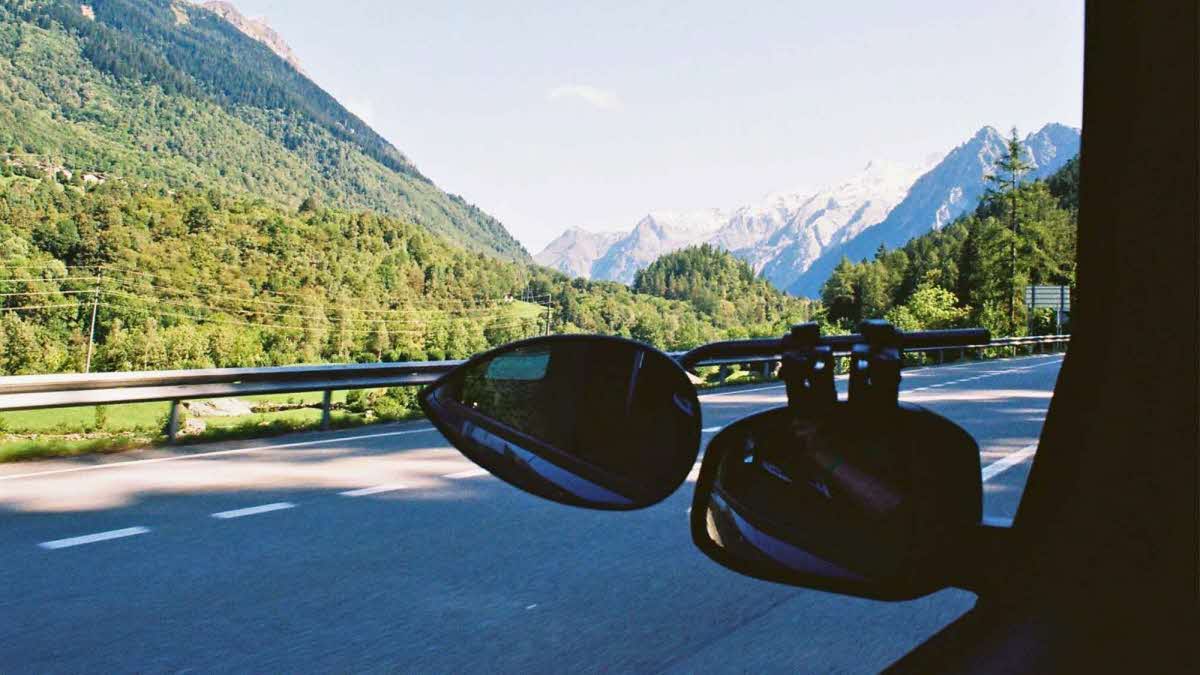
Modern solo cars are unlikely to be unduly troubled by lengthy descents, as their braking systems are far more tolerant of sustained use than once would have been the case. It’s still good practice to reduce the need to use the brakes too much by selecting a lower gear and using some engine braking, however. While petrol models naturally produce more engine braking, modern diesels also generate a similar effect, largely due to the turbocharger and various emission control systems incorporated into their exhausts.
With manual gearboxes, just select a lower gear to increase engine braking. With automatics, it may take a little experimentation. Some will automatically change down appropriately, some might need the encouragement of selecting ‘Sport’ mode which tends to increase the willingness to downshift, while others might need manual intervention to select a lower gear.
Hybrids and of course electric vehicles will have regenerative braking which provides a similar effect. However, the amount of regen is often reduced if the battery is nearly fully charged, then disappears when it's full. That’s rarely an issue with an electric car, especially if you’ve just towed up the other side of the mountain! For a hybrid with a small battery, however, it’s quite feasible for lengthy descents to get the battery back up to full charge. You should get a warning message on the dashboard to say that regen is reduced or disabled - you’ll then drive with just conventional friction brakes until the battery is depleted sufficiently.
Although braking problems are unlikely, it’s still wise to be aware of the risk of brake performance deteriorating, described as ‘brake fade’.
Fade can arise for a couple of reasons. Firstly, if brake temperature becomes excessive, the friction surfaces can deteriorate and deposit a ‘glaze’ across them which reduces braking effectiveness. Light glazing may wear off over time but heavy glazing can require brake component cleaning or replacement. Second, high temperature can boil the brake fluid, making the pedal feel ‘spongy’ or even go right to the floor. Pumping a spongy brake pedal may restore some braking force. The risk of the fluid boiling increases as it ages, as it absorbs water over time, reducing its boiling point. That’s a good reason to ensure maintenance schedules are followed.
If you sense any braking performance reduction, stop as soon as possible and let the brakes cool. A precautionary pause on a long descent is a good idea even if there are no obvious signs of brake distress. There are often ample opportunities on mountain passes to stop, frequently with views which justify a break anyway. On these kinds of roads, why would you not want to prolong the experience a little?
Towing a caravan
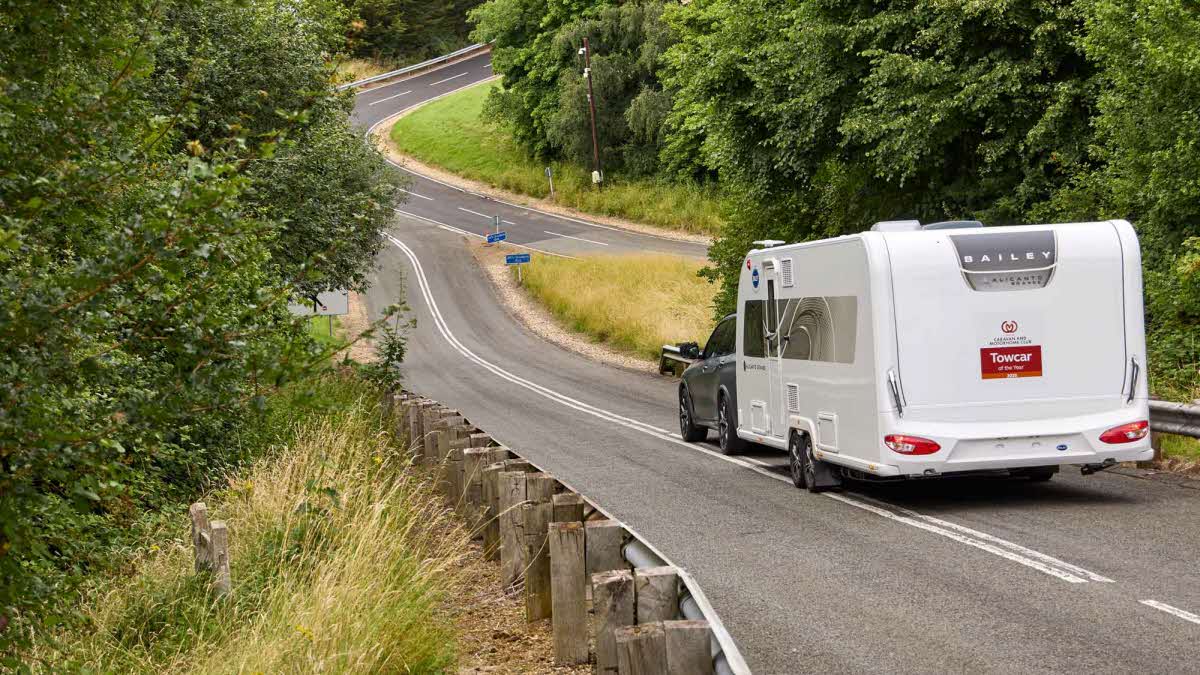
When towing a caravan, advice is a little different. Caravan brakes do less work than the towing vehicle’s, but UK-market caravans use drum brakes which are more prone to temperature build-up. They’re controlled by an overrun mechanism which reacts to any significant slowing of the towing vehicle. That can be conventional brake application, engine braking or regenerative braking, any of which especially on a steep descent may trigger the caravan brakes – with experience, you should feel this happening. This risks a situation where the driver protects the towing vehicle brakes by using engine or regenerative braking instead, but with the consequence that the caravan brakes are applied much more frequently – perhaps almost continuously on a long steep descent. That may be despite the driver only occasionally touching the brake pedal.
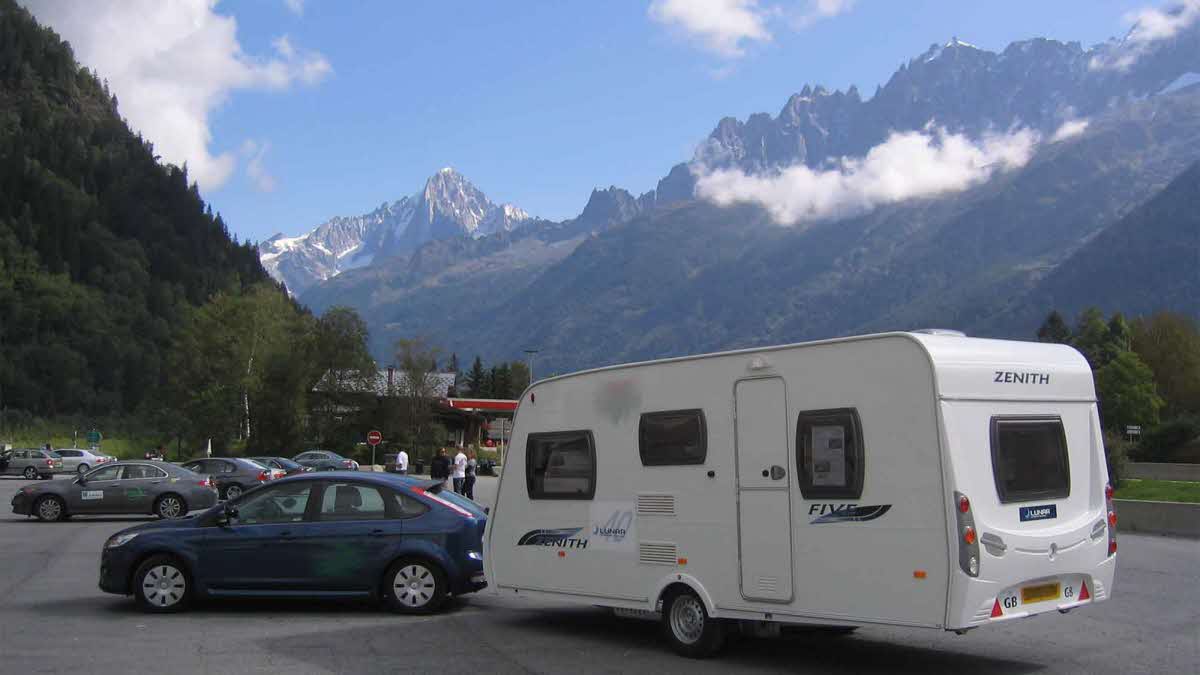
Over application of caravan brakes can cause excessive heat build-up (above 300°C or even above 400°C) and consequent damage to brakes and wheel bearings. The recommendation from brake manufacturers, somewhat counter-intuitively, is to brake harder but less often, thus giving the brakes more recovery time. If possible, light acceleration between braking ensures the brakes fully release again. These techniques may be tricky, especially with other traffic around, so stops to allow the brakes to cool again are even more important than for solo vehicles. It’s also worth a precautionary stop because a developing problem with the caravan brakes can be very hard to notice while driving. Once stopped, you can (carefully) check the wheels for excess heat, but even then, it's hard to tell how hot is too hot.
It’s also vital to ensure the brakes and overrun are in good order, to ensure they only engage when really needed, and release fully and effectively again afterwards. While wear to brake shoes and drums is often modest, periodic adjustment may still be required. A good workshop such as those in the Approved Workshop Scheme will check this as part of a routine annual service.
One final point
If you are contemplating a mountain route, take time to check details online first (most mapping sites will show the general conditions and availability of stopping points) or use the excellent listings in the Club’s ‘Touring Europe’ guide, which indicate the minority of passes where caravans are prohibited or not recommended., along with a wealth of other information. Always abide by restrictions and follow advice on suitability.