Sammy Faircloth highlights the importance of loading your caravan or motorhome correctly
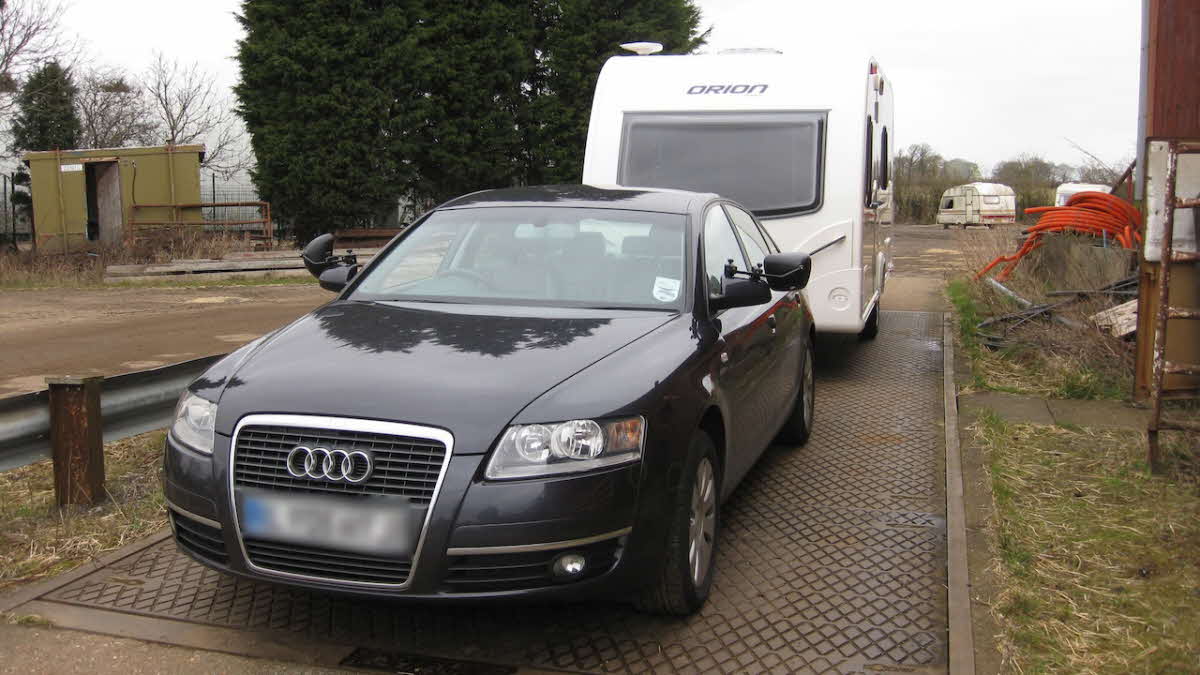
It is essential that caravanners and motorhomers understand the importance of weight when preparing for their getaways. It’s very easy to get swept up in the excitement of packing for a trip but, if you overload your vehicle, you are not only risking your safety and invalidating your insurance, you are also breaking the law.
Why weight is critical
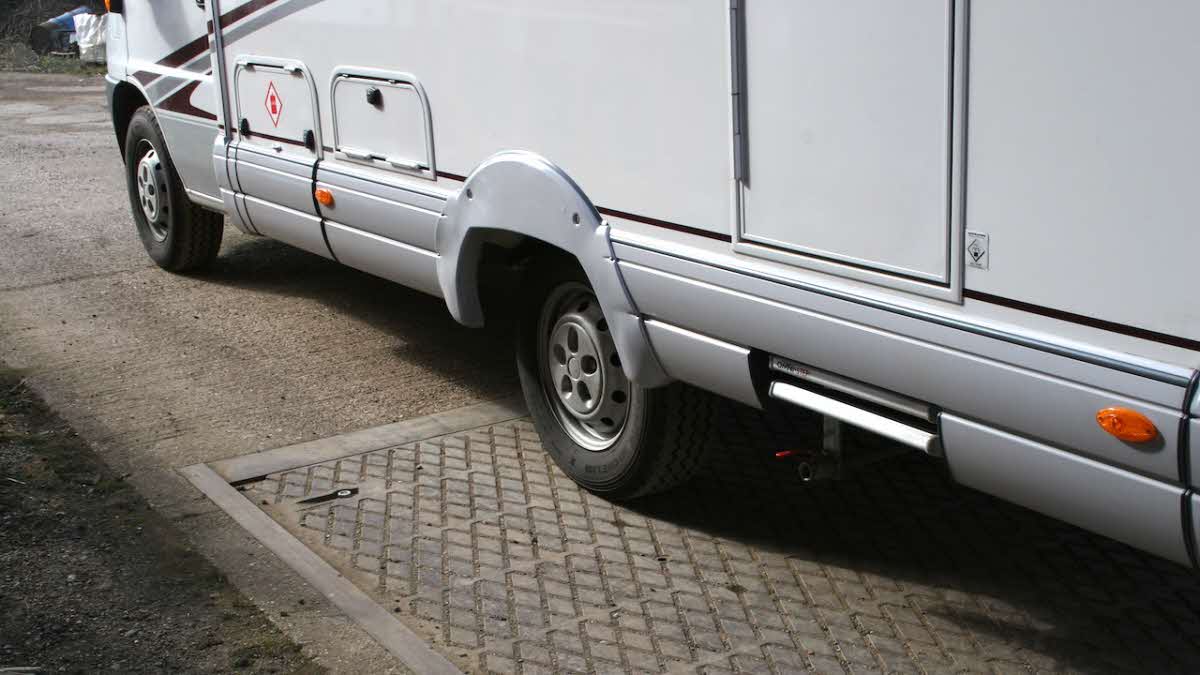 To measure a motorhome's rear axle weight ensure only the rear wheels rest on the weighbridge plates; reverse and perform the same procedure for the front axle
If your caravan or motorhome is overloaded, you could face a fine of up to £2,500, receive three penalty points on your licence, or even a driving ban.
Worse still, if you’re involved in an accident, your insurer could refuse to pay out and your manufacturer’s warranty may become invalidated. Police and Driver and Vehicle Standards Agency (DVSA) spot checks are catching more and more people with overloaded vehicles, so it pays to know your limits.
Aside from the legal side of things, an overweight or badly-loaded vehicle is dangerous. Braking distances increase, stability suffers and your outfit becomes harder to control – especially in strong winds, during sudden manoeuvres or when overtaking.
For caravanners, the risk of the caravan ‘snaking’ (swaying dangerously behind the car) is much greater if weights are exceeded or poorly distributed.
Put simply, it’s about protecting yourself, your passengers and other road users.
Weight terminology
Gallery
The GTW is the total weight of the motorhome or towcar and outfit being towed
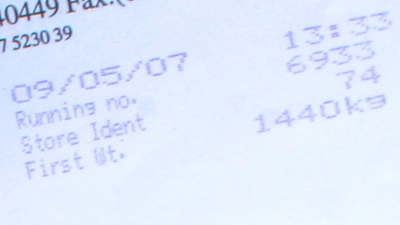
When visiting a weighbridge make sure you get a copy of the paperwork with the date, registration plate and weight recorded on it
To ensure you stay on the right side of the law – and physics – you need to understand some weight terminology...
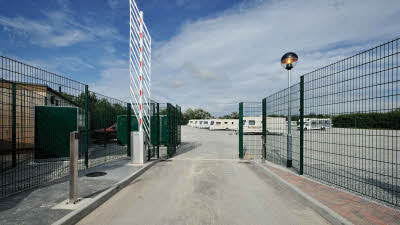
- Weighbridge: Your first port of call for checking the weight or your caravan or motorhome. Weighbridges are large vehicle scales operated by local councils or private businesses. You can find your nearest one by visiting gov.uk/find-weighbridge or by contacting your local council, nearby quarries or agricultural suppliers. It’s best to call ahead to check opening hours and costs, and whether they can accommodate your vehicle. Always get a dated printout showing your registration and weights.
- Actual Laden Weight (ALW): This is the actual weight of your caravan or motorhome, loaded as you plan to use it – including fuel, water, kit and, in the case of motorhomes, passengers. It must never exceed the vehicle’s legal limit.
- Mass in Running Order (MRO): This is the weight of the caravan or motorhome straight from the factory in its standard specification. For caravans, MRO now includes allowances for basic kit such as gas bottles and mains cables, but it rarely includes extras like air-con or motor movers. For motorhomes it includes a 75kg allowance for
- the weight of the driver.
- Maximum Technically Permissable Laden Mass (MTPLM): Sometimes called Maximum Authorised Mass (MAM), this is the maximum legal weight of your fully-loaded vehicle. Exceed it and you’re illegal and unsafe.
- Payload: The payload is the difference between MRO and MTPLM – basically, the weight of kit, food, clothes and extras you can legally carry. Be warned – fitting heavy accessories such as bike racks eats into your payload very quickly.
- Maximum Axle Weights: Each axle of a caravan or motorhome has its own weight limit. You can check individual axle weights by driving onto the weighbridge one pair of wheels at a time. Even if your overall weight is legal, an overloaded axle is still an offence – and a hazard.
- Gross Train Weight (GTW): If you’re towing, the GTW is the maximum combined weight of the tow vehicle,
- the caravan or trailer and their loads. For motorhomes towing trailers or cars, the same applies.
- Noseweight: Applying to caravans
- and motorhomes towing trailers, this
- is the downward force the hitch exerts on your towball. As a rule of thumb, aim for around 5-7% of the caravan or trailer’s ALW.
Loading tips
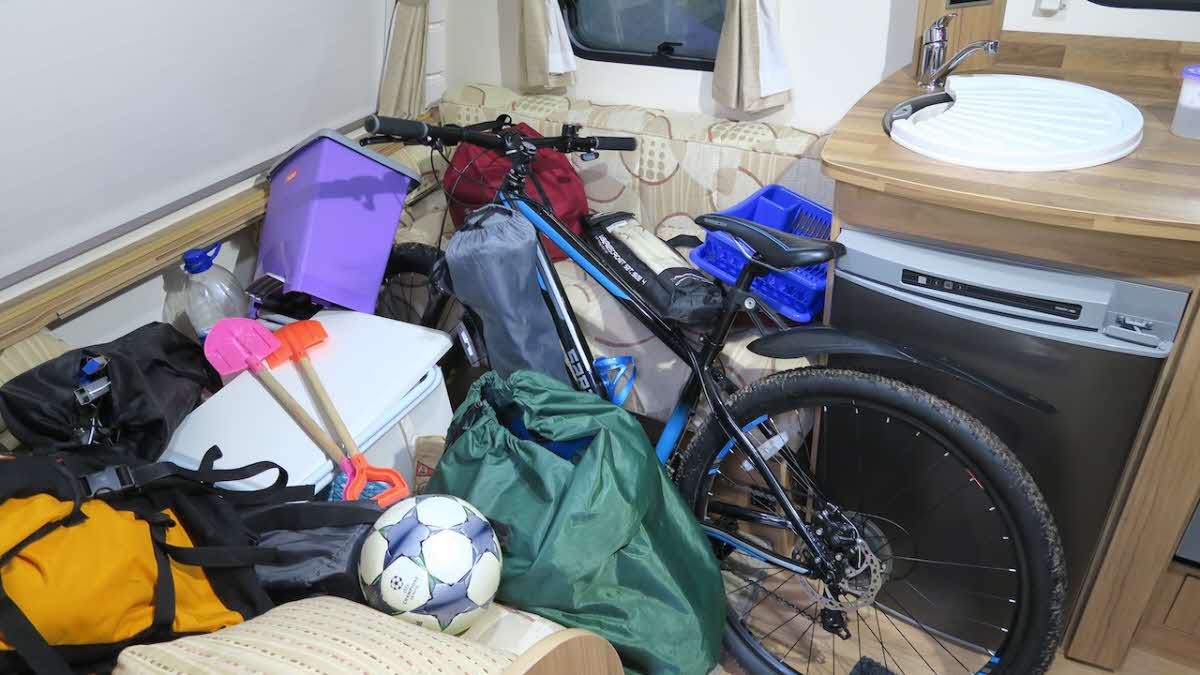 This is an example of poor packing – loose items can shift dangerously when driving
How you load your caravan or motorhome is just as important as staying within your weight limits.
- Keep heavy items low down and either over the axle(s) in caravans or between the axles in motorhomes – this improves stability and reduces bodyroll.
- Don’t fill overhead lockers with heavy items – they can shift and upset the centre of gravity of your vehicle.
- Travel with water tanks empty where possible – water is heavy and can slosh around, affecting handling.
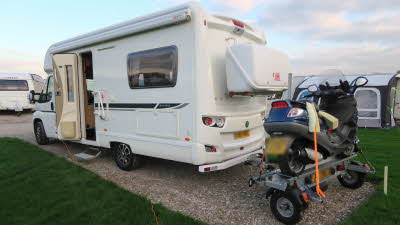
- Avoid loading up the rear of the vehicle – too much weight here can create a ‘dumbbell effect’, making your caravan/motorhome prone to swaying.
- Secure loose items so they don’t fly around when you have to brake sharply.
Final thoughts…
Caravanning and motorhoming offer an incredible sense of freedom – but that freedom comes with responsibility. Weigh your vehicle, understand all the figures and load carefully when preparing for a trip. Safe travels!