Karla Baker discovers a region bursting with history, culture and delightful landscapes on this tour of Scotland’s Lowlands
Gallery
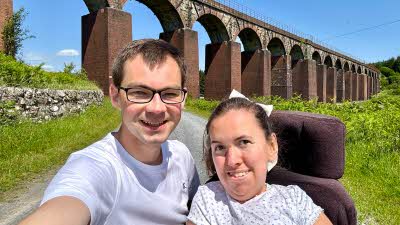
At the Big Water of Fleet Viaduct
When you think of Scotland, what do you picture? If your mind instantly conjures up images of the rugged Highlands, you’re not alone. Millions of tourists flock there each year, merely using the Lowlands as a stepping-stone – but they’re missing out, as we discovered on a tour of the country’s quietly captivating south-west.
As we travelled we had the feeling we’d been let in on Scotland’s best-kept secret. While the landscape may not be as monumental as the Highlands, its diversity is wonderful: craggy coastlines meet rolling hills, glassy lochs, dense forests, winding rivers, sleepy villages and bustling towns.
We began our tour just north of the border with England, at Fir Tree Wood Certificated Location (CL). This lovely campsite is situated on a retired Christmas tree farm, with its pitches on the edge of a sprawling Nordmann fir wood. Each pitch boasts an electric hook-up and water tap and, despite its rural feel, the site is only 10 minutes from the motorway and within easy reach of amenities and attractions. Perfect!
Scotland’s bard
Gallery
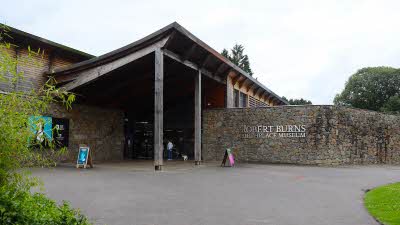
Robert Burns Birthplace Museum
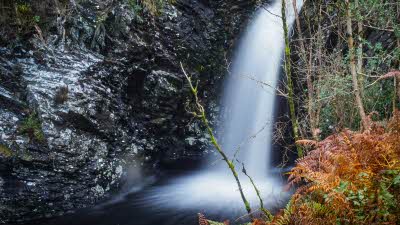
Waterfall, Galloway Forest Park. Photo by member Paul Farrington
The lively market town of Dumfries was our first port of call. After learning about its history at the Dumfries Museum, we took a stroll along the River Nith, following in the footsteps of Robert Burns, poet and national treasure, who spent his final years living and working in the town. To get a taste of what his life was like, you can visit his unassuming former home or grab a drink at The Globe Inn – a 16th-century pub he frequented. His connection to the region would only become more apparent throughout our trip.
For now, it was time to continue our journey west, to Garlieston Club Campsite. Nestled on the edge of a small, coastal village with a strong community feel, the campsite overlooks the bay and the colourful row of houses that line it. It’s just a two-minute walk to the harbour wall or into the village for a bite to eat – I highly recommend stopping at The Hive for coffee and a slice of cake.
From this site you can explore the many coastal paths, or it’s just a 15-minute drive to Wigtown, known as Scotland’s ‘national book town’ due to its large collection of second-hand book stores. However, we decided to head inland to the UK’s largest forest.
Spread across more than 300 square miles, Galloway Forest Park provided a fantastic day out. We began at the imposing Big Water of Fleet Viaduct, before heading to the Grey Mare’s Tail waterfall for a short walk.
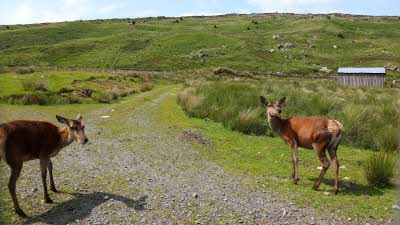
We then hand-fed the magnificent deer at the Red Deer Range before making our way east to Raiders’ Road Forest Drive. This 10-mile track, once used to transport livestock, is now a scenic driving route, open from April to October (a small charge of £3 applies and the road is not suitable for caravans/larger vehicles.)
As we meandered alongside the River Dee, with the sunshine breaking through the trees, we felt truly immersed in the forest. About halfway along we discovered Otter Pool, where the trees parted to reveal the perfect picnic spot on the edge of the tumbling water. We just had to stop! It was a tranquil end to a perfect day. On the way back to Garlieston we nipped into the Bladnoch Distillery, just outside Wigtown, and picked up a wee dram for later.
Mull it over
Gallery
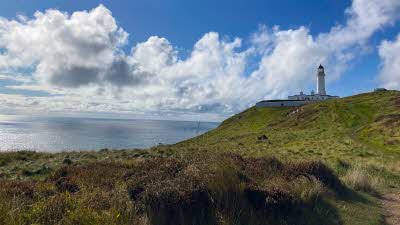
Mull of Galloway Lighthouse. Photo by member Rachel Shears
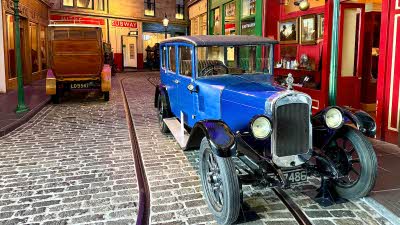
Riverside Museum, Glasgow
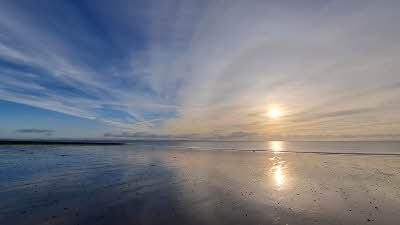
Near New England Bay Club Campsite. Photo by member Ian James
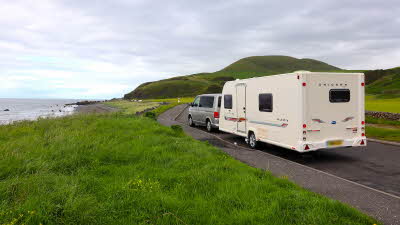
The following day we hitched up the caravan and took the coast road to our next stop. New England Bay Club Campsite has been on our bucket list since before we even bought our caravan, so we were excited to finally visit. It didn’t disappoint; after setting up on our beach-front pitch, we relaxed immediately, drifting off to the gentle murmur of the sea.
Perched on the Rhins of Galloway peninsula, it’s a quiet place and ideal if you’re intending to switch off and relax. However, if you prefer to keep busy, there are pretty coastal villages, castles, landscaped gardens and wide, empty beaches to explore.
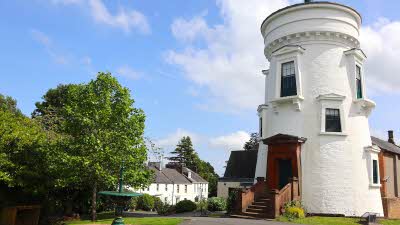
We love geographical extremes, so of course had to visit Scotland’s most southerly spot, the Mull of Galloway. Looking out into the Irish Sea, the land narrows to a point on which is perched a towering lighthouse, which you can climb.
At the visitor centre we learned about its history, and got up close to the impressive vintage engines that power the last working foghorn on mainland Scotland. But it’s worth visiting for the views alone: on a clear day you can see England, Northern Ireland and the Isle of Man from this one spectacular setting.
Ayr waves
Gallery
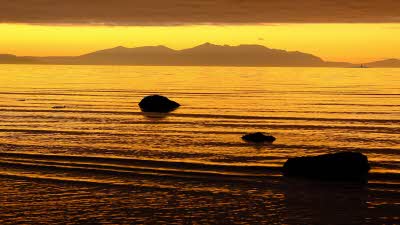
Sunset near Ayr Craigie Gardens. Photo by member Thomas Greig
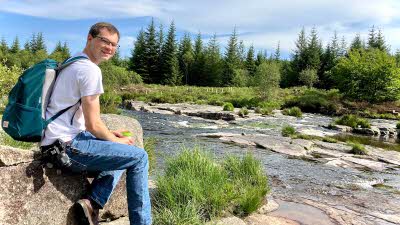
Otter Pool, Galloway Forest Park
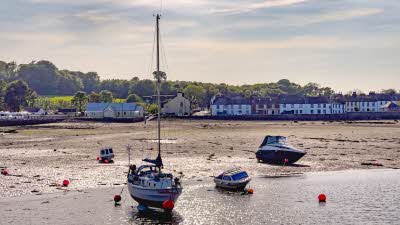
Near Garlieston Club Campsite. Photo by member Jackie Meredith
Feeling well rested, we travelled northwards to our next Club campsite, Ayr Craigie Gardens. In contrast to our previous stop, this site is situated in a bustling town, with shops, restaurants and a sprawling seafront within walking distance. We couldn’t resist popping down to the beach on that first evening, and were thrilled to discover that the sand was firm enough for my powerchair to roll on! This is a rare occurrence, so we revelled in the opportunity to explore the shoreline together, watching the waves as the sun dipped into the horizon.
We’d discovered where Robert Burns’ story ended, but did you know that Ayr is where it all began? The thatched cottage in which he was born and raised until he was seven has been restored to its original state, paired with a modern museum.
A guided tour of the museum really brought his story to life, while his cottage gave us an intimate insight into his early years. It felt quite surreal to be inside the home his father built, sitting by the fire that once warmed him more than 250 years ago.
Bonnie Clyde
 Illustration by Louise Turpin
The final stop on our tour was Strathclyde Country Park Club Campsite. Conveniently positioned just off the M74 motorway near Glasgow, we’d previously stopped here en route to the Highlands and islands, but this time we were looking forward to exploring properly. In the immediate vicinity you’ll find Strathclyde Loch with its waterside walks, the grand ruins of Bothwell Castle, the David Livingstone Birthplace Museum, and more golf clubs than you can shake a… club at. If that’s not enough to keep you entertained, the centre of Glasgow is reachable in just 20 minutes.
Glasgow is a vibrant city, rich in culture. There is a mixture of museums to visit, but we chose the Riverside Museum, on the banks of the Clyde. We lost ourselves among the array of vehicles on display, from old trams and police cars to machines used in TV and film. My personal highlight was the replica Glasgow street dating back to the 1800s, complete with a cobblers, traditional pub, subway station and more. We felt like we’d been transported back in time.
While many holidaymakers are yet to discover this part of Scotland, we came to realise that plenty choose to return year after year. We will certainly be back, and I highly recommend you add it to your list − before the rest of the world catches on.