

Book a Club campsite
Explore hundreds of Club Sites and plan for stays throughout the year. There are plenty of locations to choose from, search and book today.
Book now
Lee Davey looks beyond South Devon’s outstanding scenery and seaside resorts to find a mix of industrial, cultural and maritime history
 Magical Dartmoor. Photo by member Andrew Pattenden
With its rolling green hills, charming villages and towns, moorland national park and golden sandy beaches, South Devon has long been a favourite with holidaymakers. But beyond its scenic views and seaside attractions lies a region brimming with history, where medieval streets, stately homes and maritime landmarks offer glimpses into centuries past. So, come with me on a tour that uncovers a very different side of the county...
Tucked away in a quiet valley, Dornafield Dartmoor Club Campsite is where our family’s caravanning journey began more than 15 years ago. A peaceful, welcoming spot, the site is set in beautifully-maintained grounds with a 14th-century farmhouse its focal point – it’s a fitting location to begin a historical tour.
Nearby Totnes is a market town brimming with character, and deserving of a full day’s exploration. The climb up to the classic Norman motte-and-bailey Totnes Castle rewards you with sweeping views over the River Dart. With breath caught, venturing back into town you are greeted by cobbled streets, Elizabethan architecture, independent shops and charming cafés from which to watch the world go by. [The town is also home to Steamer Quay Club Campsite, which has recently been refurbished.]
A little farther out is the Dartington Estate, where you can discover glorious gardens shaped by famed designers Beatrix Farrand and Percy Cane and gaze in admiration at the Memorial Figure sculpture by Henry Moore. The White Hart, the estate’s bar and restaurant, serves delicious food, while film buffs among you will no doubt enjoy the on-site Barn Cinema.
Berry Pomeroy Castle offers a different, yet no less exhilarating, experience. This ruin, managed by English Heritage, is associated with numerous ghosts, including the spirit of Margaret Pomeroy – the ‘White Lady’ who is said to haunt the dungeon. Whether you believe the tales or not, the eerie beauty of the site is unforgettable.
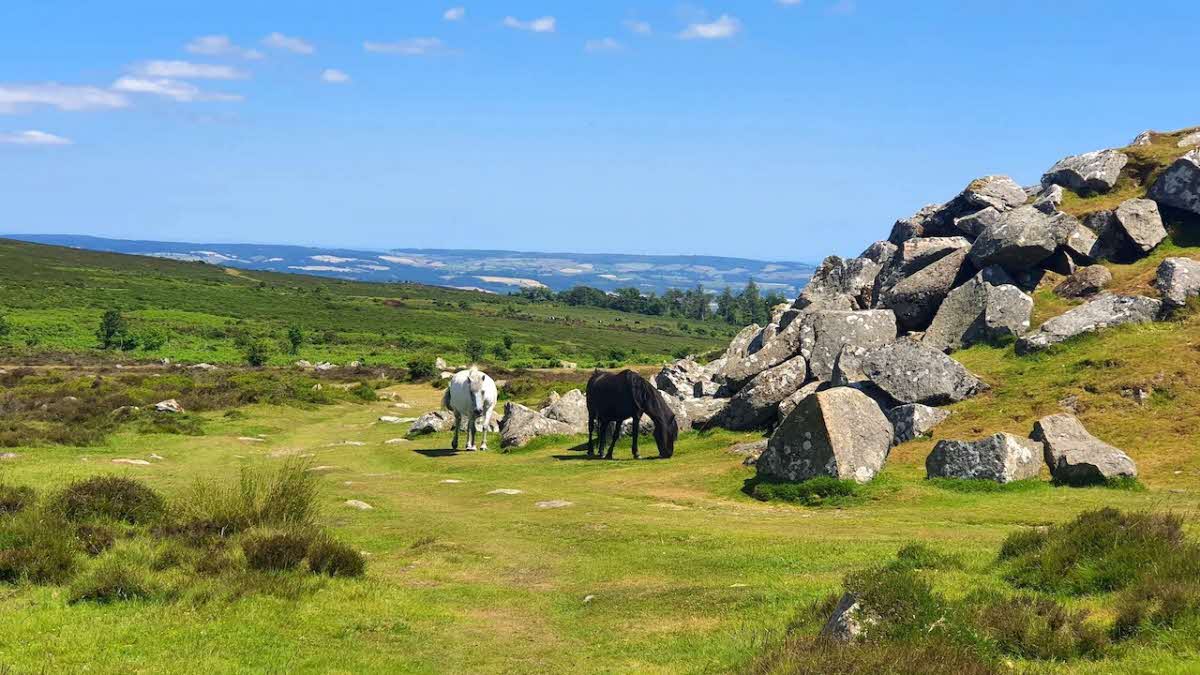 Haytor Quarry, Dartmoor. Photo by Jill and Simon Ward
Just north of Newton Abbot on the edge of Dartmoor, Stover Club Campsite is an ideal base from which to uncover several more layers of Devonian history, including ancient moorland, industrial relics and steam-age nostalgia.
Our days here began gently, with strolls through Stover Country Park. Once central to the area’s granite quarrying in the 18th and 19th centuries, today the park is a haven for wildlife and walkers alike. We followed the ‘Lakeside Trail’, stopping to read about the old horse-drawn tramways that once transported stone from Haytor Quarry to the Stover Canal.
From horse power to steam power – at Buckfastleigh station we boarded a train on the South Devon Railway and, as the vintage carriages creaked into life and the engine puffed into motion, we were whisked back to a golden age of travel. Look out for the line’s fun 1940s weekends, complete with wartime vehicles, period dress and musical nostalgia – see southdevonrailway.co.uk for dates and details.
Just a short drive away, Buckfast Abbey offers a chance for a spot of peace and reflection. First home to an abbey way back in 1018, this site hosts a community of Benedictine monks to this day. We wandered the gardens, visited the church and left with a bottle of the famous Buckfast Tonic Wine to enjoy later back on site.
No stay at Stover would be complete without heading off to Dartmoor. Haytor Rocks offer panoramic views and the landscape tells tales of Bronze Age settlements and long-forgotten tin mines. There’s a stark beauty to the moors – a reminder of the hard lives once led in this rugged, remote part of Devon.
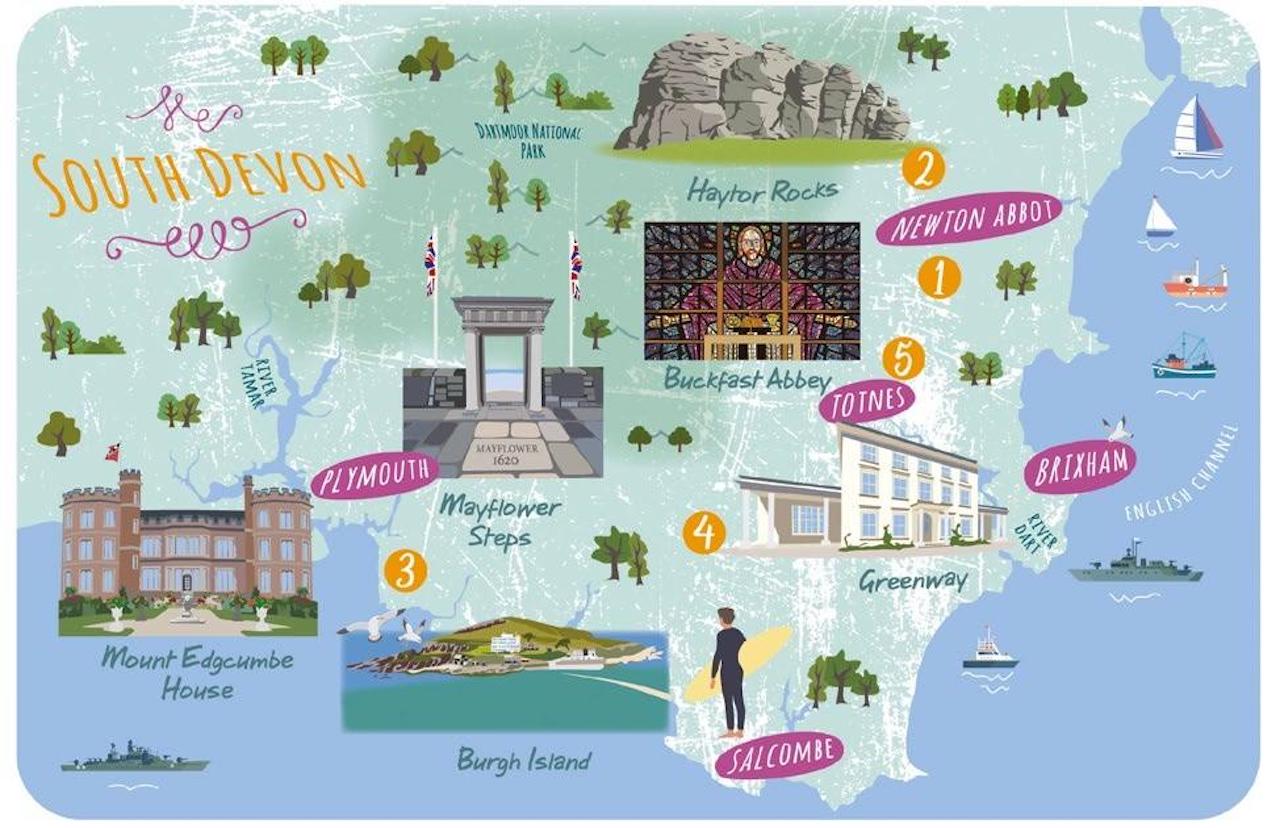 Illustration by Louise Turpin
Perched above the city’s harbour, Plymouth Sound Club Campsite offers more than just sea views. We began our exploration of Plymouth at the Mayflower Steps memorial, pausing to reflect on the bravery of the Pilgrims who set sail into the unknown more than 400 years ago. Next door, the Mayflower Museum brought their story to life with engaging displays and thought-provoking artefacts.
A short stroll led us to The Hoe, where Sir Francis Drake is said to have calmly finished his game of bowls before confronting the Spanish Armada. Standing there, with sweeping views over the Sound, it’s easy to feel the weight of history. The nearby 17th-century Royal Citadel, with its towering stone walls and tales of siege and strategy, adds another dimension to Plymouth’s military heritage.
The Barbican – the city’s old port area – is a lively spot full of character, with a great mix of bars, cafés and restaurants lining the cobbled streets.
Once fed and watered, we made our way to Mount Edgcumbe House and Country Park, just across the Sound and over the border into Cornwall. Originally built in the 1500s and lovingly restored after wartime bombings, the house feels more like a family home than a museum. There are no ropes or barriers, just richly-furnished rooms filled with antique globes, portraits and polished oak panelling. It’s a place that quietly tells its story, room by room, and invites you to listen.
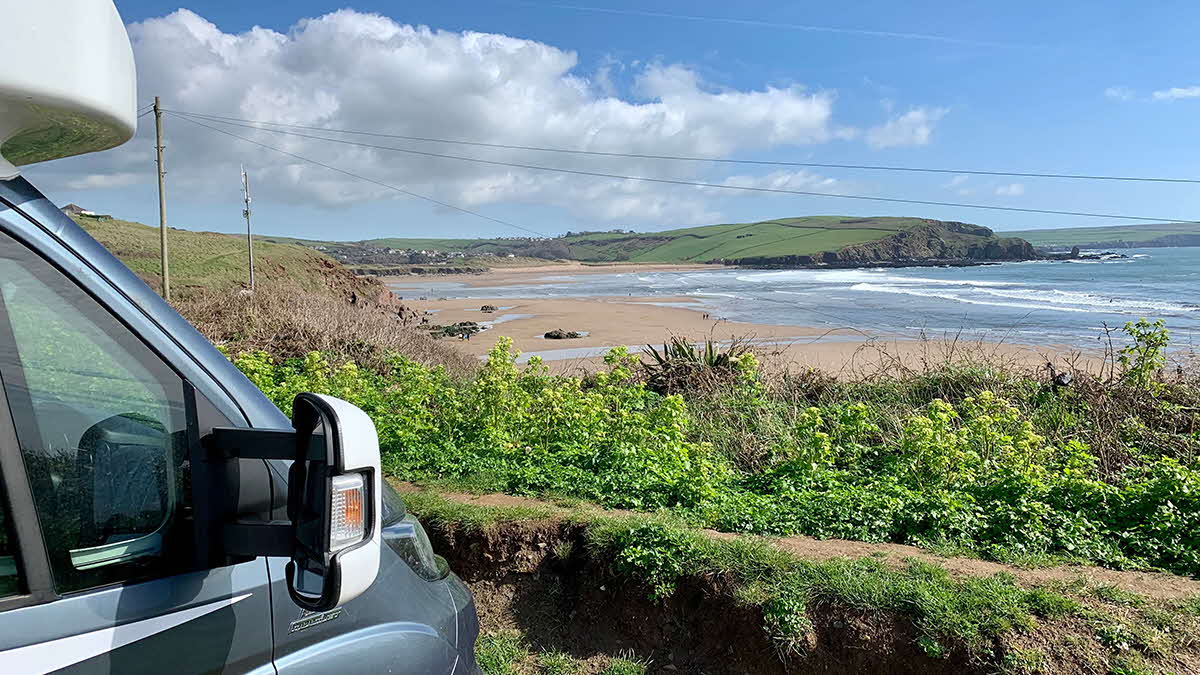 Bigbury-on-Sea. Photo by member Ian Peters
Snugly located in the hills of the South Hams, and lying to the east of Plymouth, Modbury Club Campsite offers a break with a perfect blend of peace, history and coastal adventure.
The small town of Modbury, just a short walk away, can trace its roots back to the 12th century. We spent a couple of hours exploring its narrow streets, admiring the architecture and soaking up the atmosphere. A small market in the town square is the place to purchase handmade crafts, local cheeses and fresh produce.
One of the highlights of our trip was visiting Burgh Island at nearby Bigbury-on-Sea. We strode across the sandy causeway to this iconic tidal island, then took the quirky sea tractor back (make sure you check tide times well in advance). The island’s Art Deco hotel, famously associated with Agatha Christie, had us imagining murder mysteries unfolding over afternoon tea.
Bigbury-on-Sea beach itself is ideal for surfers – wetsuits, boards and lessons are all available from Discovery Surf School (discoverysurf.com).
For something completely different, head to Overbeck’s Garden (and Museum) at Sharpitor near Salcombe. The Edwardian home of British chemist and inventor Otto Overbeck, this National Trust property’s subtropical gardens are stunning, with views stretching out over the coast. Meanwhile, the museum’s collection is a wonderfully-odd assortment, featuring everything from model ships and nautical tools to stuffed animals and curious inventions, including some of Overbeck’s own.
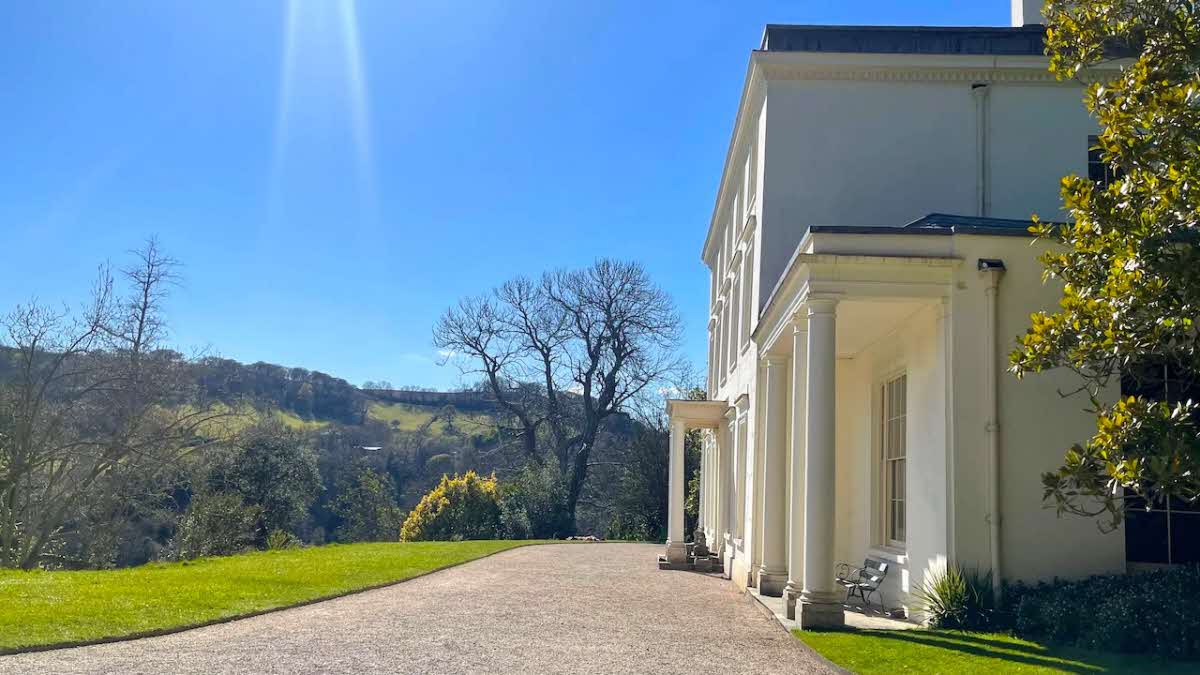 Greenway House. Photo by Wendy Morris
On the edge of the village of Littlehempston, and just a few minutes from Totnes, Pine Ridge Woodland CL is a tranquil retreat. The site is located just a couple of hundred yards east of The Pig & Whistle pub on the A381 and has a clearly-marked entrance. Its five enormous pitches with electric hook-ups neighbour mature woodland that’s rich in birdlife.
One of our favourite day trips was to Greenway, Agatha Christie’s holiday home, which is now managed by the National Trust. Overlooking the River Dart, the house feels as it might have during the famous author’s visits during the 1950s. Wandering through the rooms, it is easy to imagine her pausing by the window with a notebook or gathering with family around one of the well-worn board games still neatly stored in the sitting room.
Back at Pine Ridge Woodland, there’s plenty to enjoy – there are two pubs (the Tally Ho and The Pig and Whistle) nearby, while the surrounding woodland is ideal for a good roam with or without a dog. Exploring South Devon from these five scenic campsites is like a journey into the past. Whether it’s wandering medieval lanes, exploring castle ruins or walking in the footsteps of the Pilgrims, each location puts you within easy reach of some of the county’s most fascinating stories. With every outing, you’re not just seeing the sights, you’re stepping into history.