
Book a UK Club campsite
Search and book a great value holiday today.
Book now
Nick Harding is enchanted by vintage cars and trains on a themed tour of the West Midlands
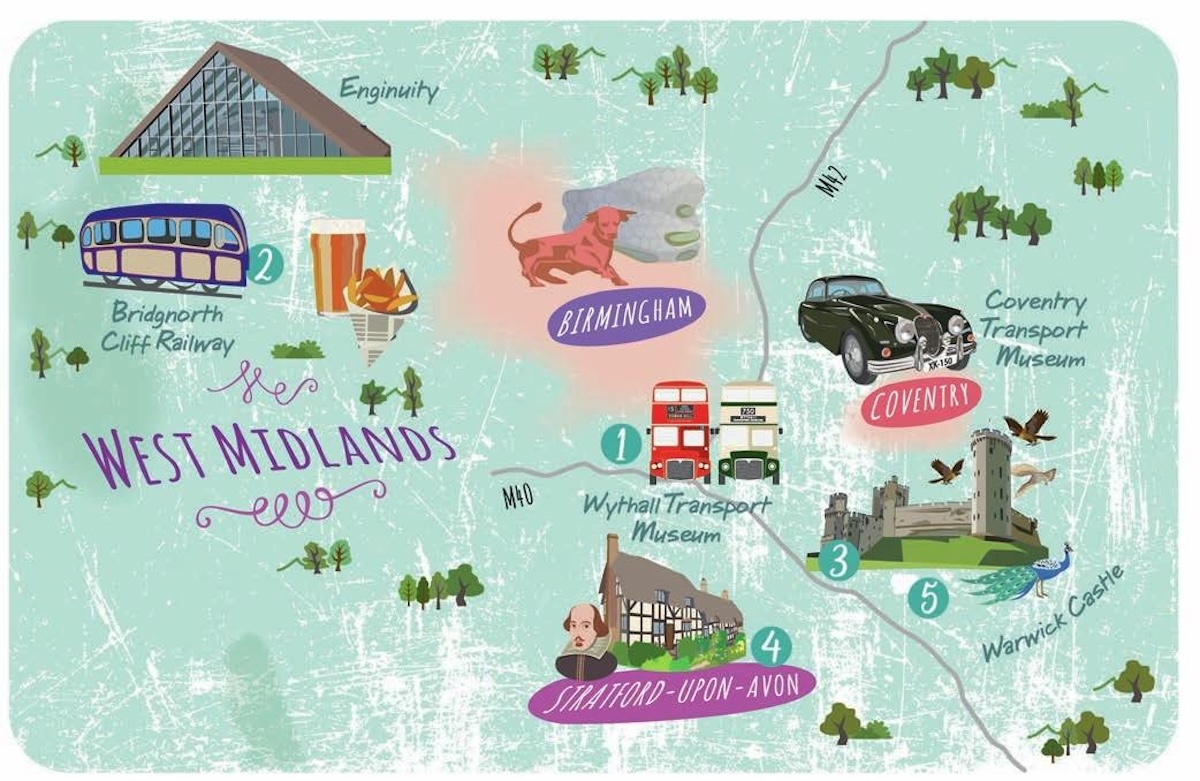
Illustration by Louise Turpin
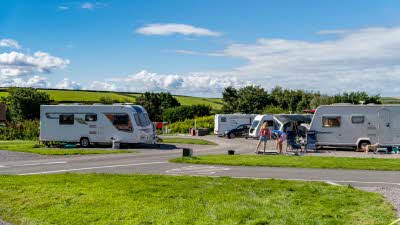
It was something of a reunion when I checked into Chapel Lane Club Campsite in the countryside south of Birmingham – I’d met managers Diane and Terry two weeks previously at another Club site, Broadway, in the Cotswolds. They certainly seemed well settled at their new location. Diane pointed out that many members use Chapel Lane as a stop-over when heading down to the south-west of England, or northwards to Scotland. However, this picturesque site is well worth a longer stay; for a start, there’s the absolutely fascinating Transport Museum Wythall right next door.
And so our five-site tour of the area began. And you’ve probably already guessed the theme: transport. This is a perfect choice for a region that’s steeped in a tradition of cycle-, car- and bus-making.
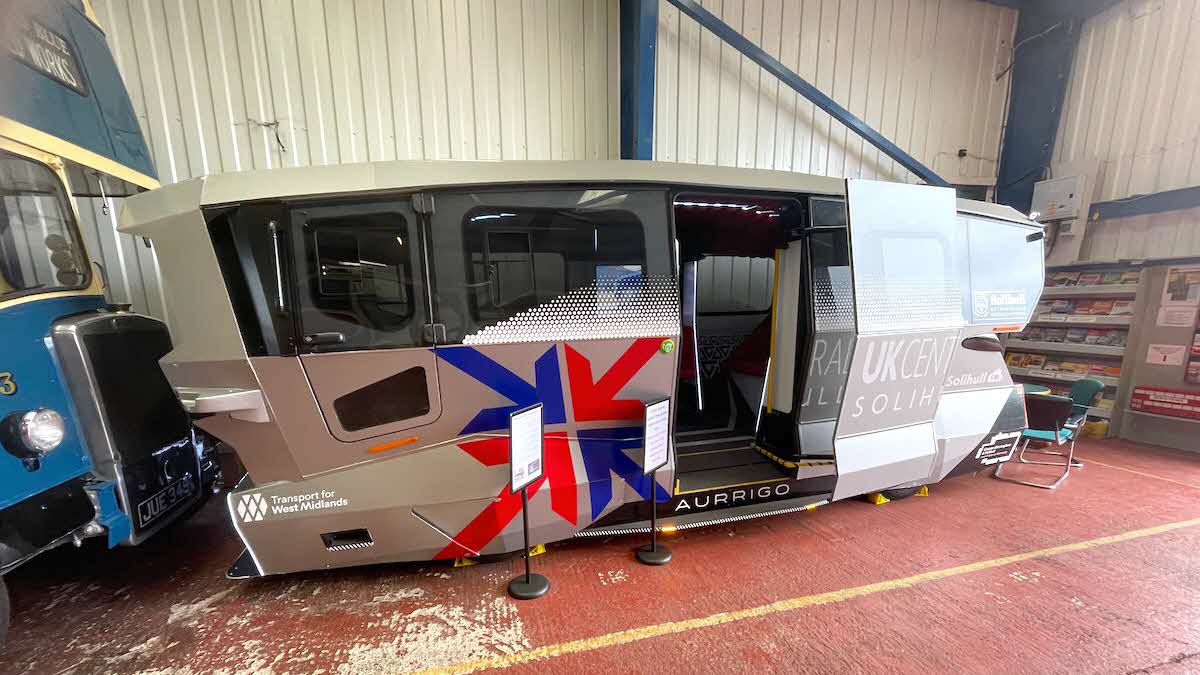 Transport Museum Wythall
Although Transport Museum Wythall (pronounced ‘with-all’) is conveniently situated for visitors to Chapel Lane, it is not too far a drive from the other sites we stayed at on this trip. It spotlights the fleets of buses that used to transport locals to and from work across the West Midlands, as well as electric vehicles such as bread vans. There’s even a milk float dubbed ‘Ernie – The Fastest Milk Float in the West’, a reference to comedian Benny Hill’s 1971 number one single.
The museum occupies part of what was RAF Wythall, the headquarters of a barrage balloon station during the Second World War. It later became
a holding area for the Rover cars that were being produced at nearby Longbridge.
We were lucky enough to bump into museum trustee Denis Chick during our visit, who gave us an impressively detailed history of the museum (without notes!) before we headed off to inspect everything from a 1913 Tilling-Stevens motorbus right through to the futuristic, electric-powered, self-driving Aurrigo Auto-Shuttle.
Guests also have the opportunity to take a ride on the impressive miniature steam railway for a modest fee – great fun for enthusiasts of all ages.
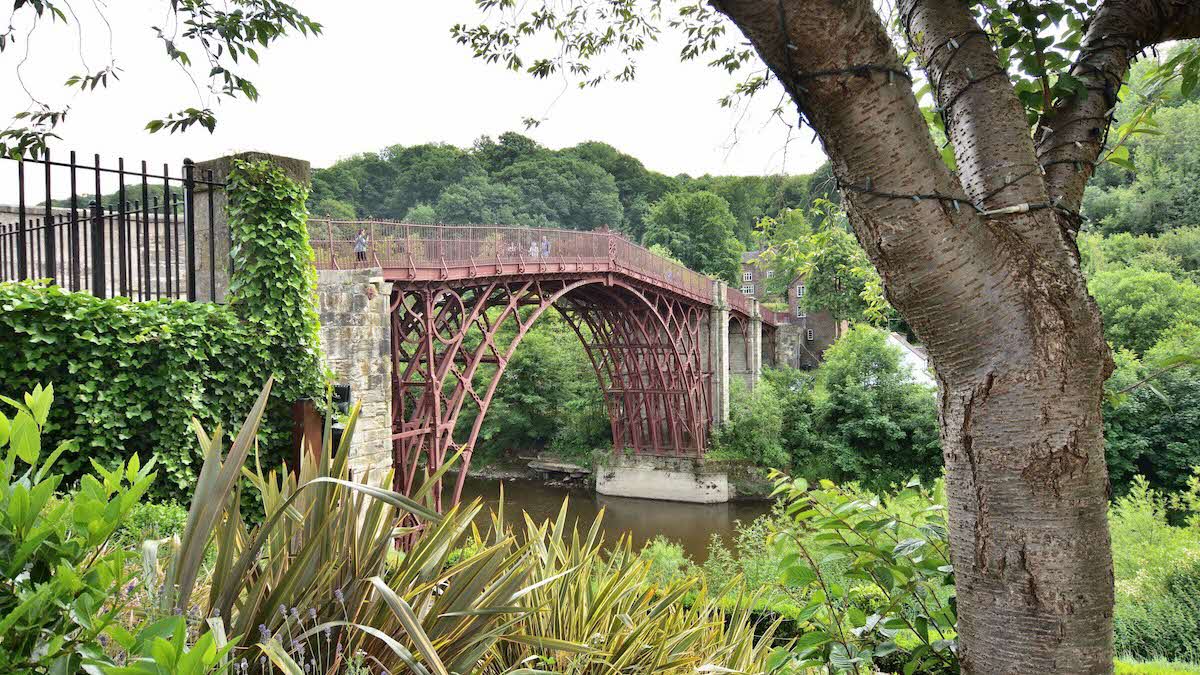 Ironbridge. Photo by member Mel James
Our second stop, the beautiful Stanmore Hall Touring Park Affiliated Site (AS) in Shropshire, is about 11 miles south of the famous village of Ironbridge. The Gorge here is a UNESCO World Heritage Site due to its significant contribution to the Industrial Revolution. That era saw rapid developments in transportation, the use of canals and trains for commercial purposes, and popularised trains and buses for leisure activities.
Today, the Ironbridge Museum Trust oversees historic sites as well as 10 museums within a six-mile radius – including Enginuity, where you can find out more about the world’s first electric car. We started our day, though, at Blists Hill, an amazing recreation of a Victorian town where you can explore the various shops and workshops, and meet the inhabitants. Or you can hop on-board the horse bus and let George the gentle 16-year-old pony take you around.
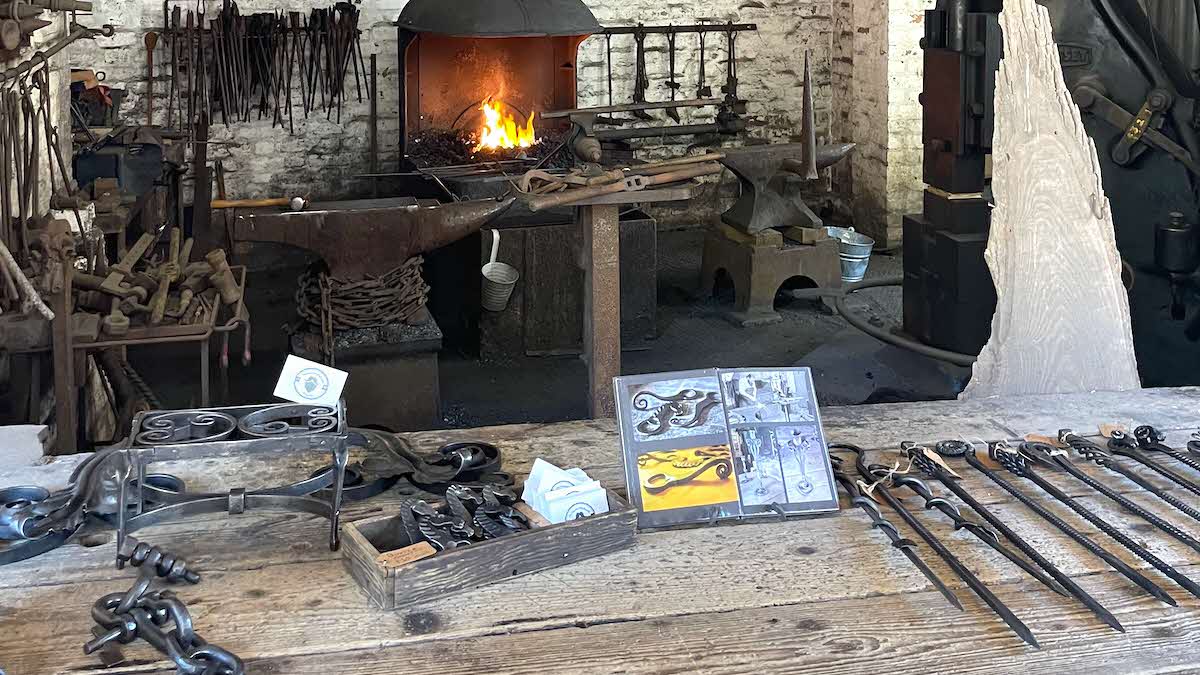 Blists Hill Victorian Town
Blists Hill gives a flavour of Victorian times in more ways than one. You can purchase fish and chips from a traditional chippy and take them to the pub next door to enjoy with a beer. Our visit to the pub coincided with an old-fashioned sing-along, led by a man who bore a close resemblance to the police officer we’d encountered earlier!
We also dropped in on the bank, chemist, candle-making shop, blacksmith, post office and more – all faithful reproductions with costumed staff on hand to tell you all about them. Blists Hill is also where you’ll see the Trevithick Engine, the world’s first locomotive to run on rails. If possible, make time to go on the self-guided 45−90 minute walk from Blists Hill. Starting at the town mine’s winding engine, it offers a peaceful stroll along the canal, past the Birmingham and Midland Tramways electric tram that was later repurposed as a Sunday school gospel car, and on to the top of the Hay Inclined Plane. This was constructed in 1783 so that tubs carrying all manner of goods and materials could be pulled up from the River Severn to the old Shropshire Canal.
Those other Ironbridge Gorge attractions were going to have to wait for another day for us. If you’re heading to Ironbridge – and you really should – make sure you purchase a Pass Plus. This covers admission to everything for 12 months, plus 10% discount on food and shopping, and free parking. At the time of writing the online price was £43 per person, which represents excellent value with so much to see.
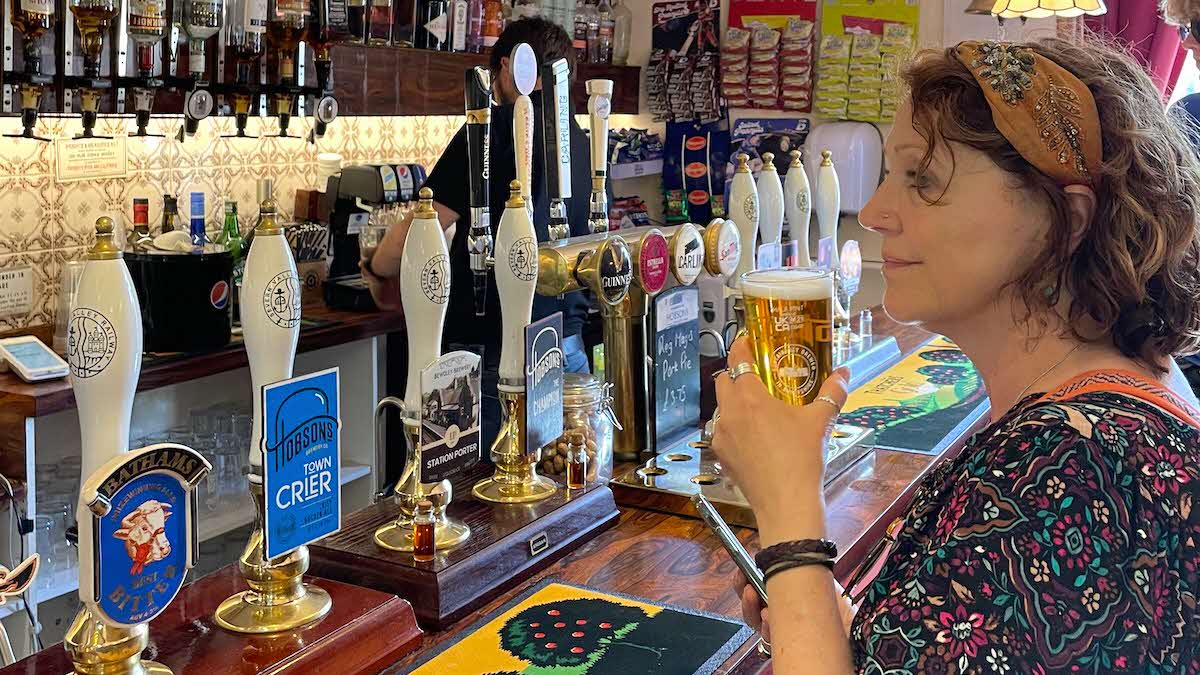 Time for a breather
Just three miles from the Stanmore Hall site is the town of Bridgnorth. If you prefer not to drive, a choice of routes taking about an hour and a quarter are available – or you could catch a bus nearby. There’s also ample motorhome parking (not tag axles) in Bridgnorth at Listley Street North – daily charges apply.
Our afternoon in Bridgnorth didn’t quite start the right way – we were running late for a train ride which was part of Severn Valley Railway’s (SVR) annual Spring Diesel Festival. There was the promise of cab experience – and thankfully we made it just in time! It may have been only a short trip, getting up to a maximum of about 15mph (the speedometer maxes out at 20mph), but it was truly memorable. If steam’s more your thing, there are plenty of opportunities here on other days, too, making it something of a paradise for lovers of historic rail travel.
SVR’s Bridgnorth station is a lovely old premises, complete with its own bar. Did we stop for a beer? Of course we did! But only to give us refreshment before our next trip. Bridgnorth’s Cliff Railway is the UK’s oldest and steepest inland funicular railway. It opened in 1892 and still operates around 150 times a day between Bridgnorth’s High and Low Towns.
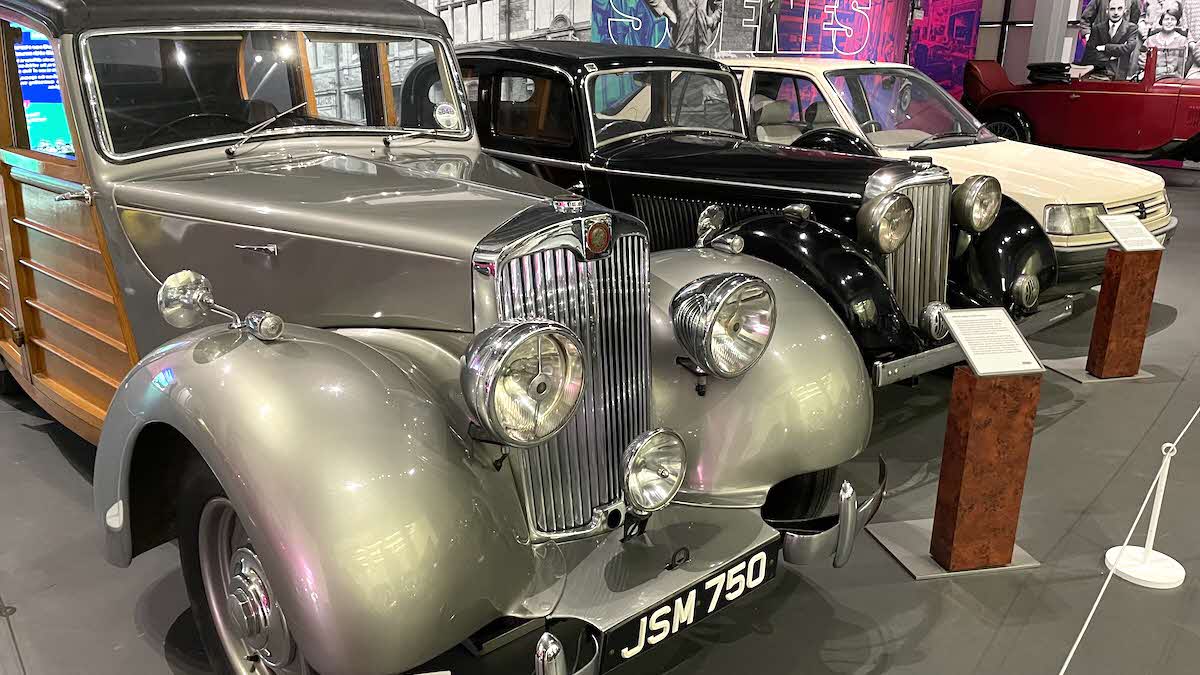 Display at the Coventry Transport Museum
From here we headed east for Coventry Transport Museum, home to the largest publicly owned collection of British vehicles in the world.
So many marques date back to the era when British manufacturing ruled the roost and Coventry was known as the ‘UK’s Motor City’. The museum is home to machines created by Alvis, Hillman, Humber, Jaguar, Singer, Rover, Triumph and Daimler – officially the UK’s first car maker.
Some of the vehicles have unique interest. We encountered General Montgomery’s beloved Humber and an electric Mini Countryman from the 1960s, right through to a couple of touring caravans – one, a 1938 Eccles, was part of a family tour from London to Damascus in the 1950s – and a part-finished DIY campervan conversion of a Standard Atlas van.
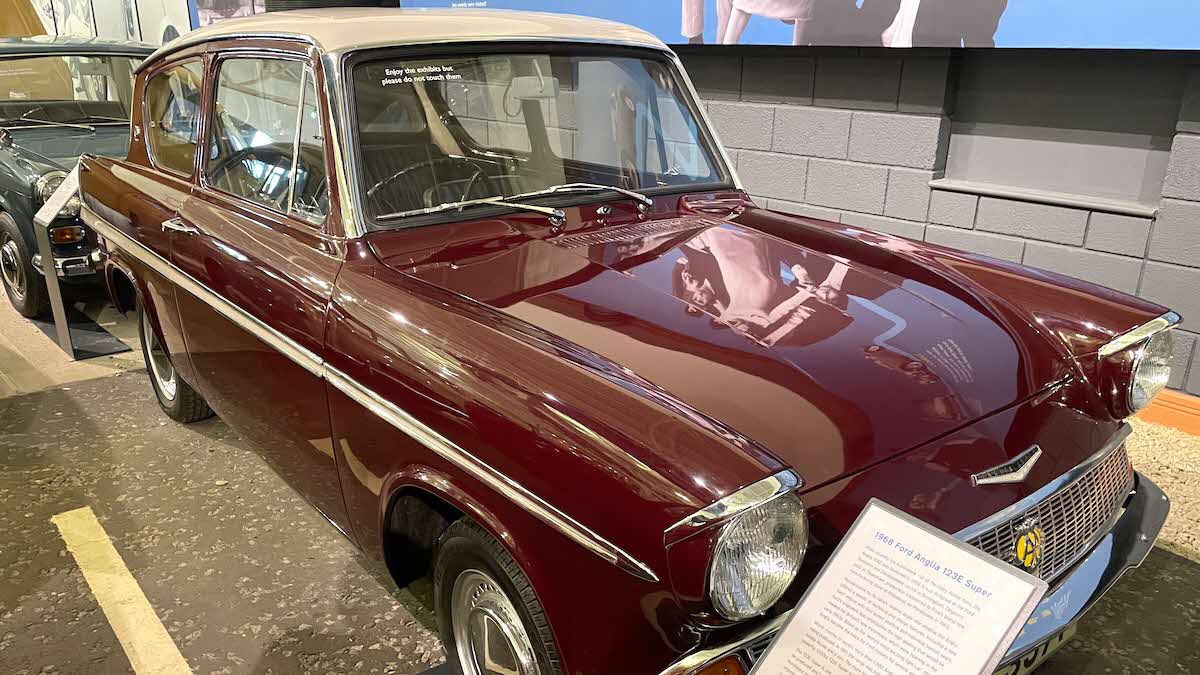 British Motor Museum, Gaydon
Our next stop was the village of Gaydon in Warwickshire, home to the wonderful British Motor Museum, where hundreds of UK-produced cars are on display. Coincidentally, our visit coincided with the VauxALL event taking place outside. It featured a great display of vehicles commemorating all things Vauxhall (plus Bedford and Opel), including one particular model that was a highly favoured towcar among Club members in its time. This year sees 50 years since the launch of the Cavalier.
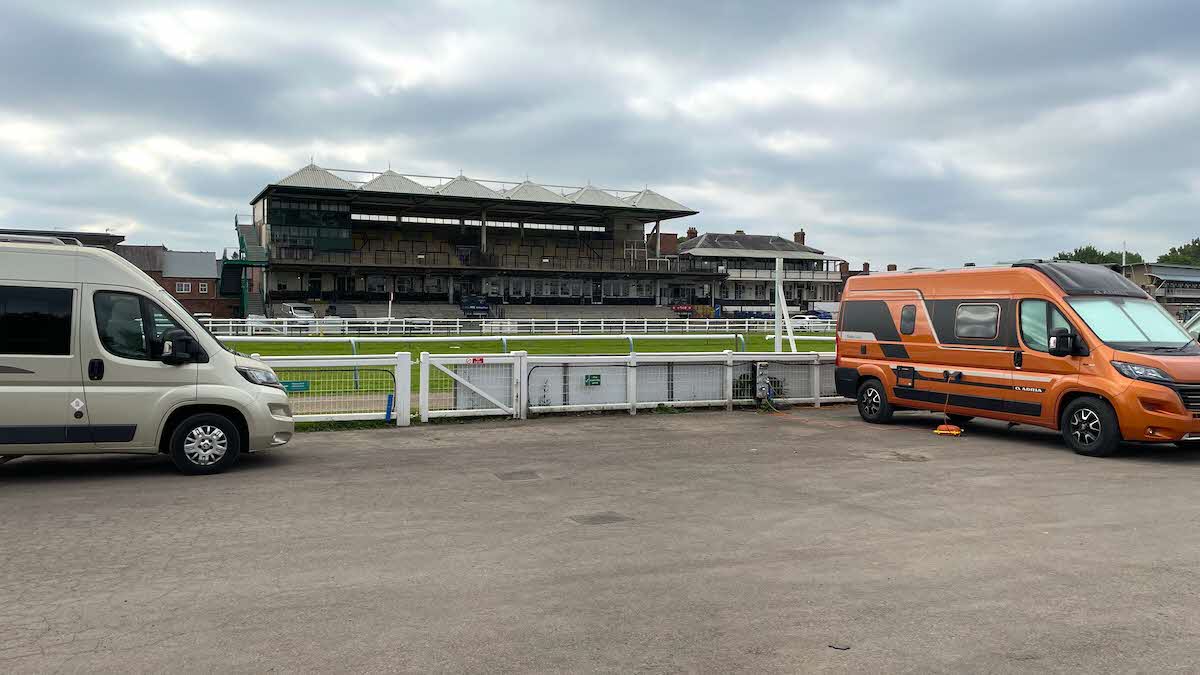 Warwick Racecourse Club Campsite
Warwick Racecourse Club Campsite – situated 12 miles to the south of Coventry – is another great base for visiting the transport attractions of the region. We walked over the race track and uphill into Warwick itself, enjoying probably the sunniest day of the year so far. That evening we dined at the Rose and Crown just off the main Market Place, which offered a great welcome and good food with an emphasis on sustainable practices and sourcing. It was the ideal way to round off the day.
Nearby Ingon Bank Farm Certificated Location (CL) would make a great alternative stop-over location. Set on a working sheep farm and offering beautiful open countryside views, it is just two miles from Stratford-upon-Avon, the celebrated birthplace of our most famous playwright and home to numerous Shakespeare-related attractions. If you want to stay with the transport theme, why not take a stroll along the Stratford Greenway, a five-mile traffic-free path that used to be part of the rail network until the early 1960s.
Sadly our whistle-stop tour of the West Midlands was drawing to an end – but we had time for one more stay, at Harbury Fields Farm Touring Park AS. This well-presented site is well placed for visits to both Stratford-upon Avon and Warwick, while a bus departs hourly from the end of the drive to the famous town of Leamington Spa. Here you could visit the historic Royal Pump Rooms which are home to an art gallery and museum.
It was time to once again jump into our very modern mode of transport (a campervan) and head home. This journey had given us a great chance to reflect on the development of the motor vehicle and its tight links with our social history. The West Midlands packs in a wealth of attractions into a relatively small area – I thoroughly recommend you head there and take your own trip down memory lane!
Walking
You can use the Outdooractive app to enjoy a variety of walking routes in the region. The basic app is free to use, but Club members benefit from a €10 discount on Pro or Pro+ first-year subscriptions. With the Pro version you receive features such as access to topographical maps and special activity networks, while Pro+ gives you 3D maps and more. To find out more and to see a collection of routes near Club sites, see camc.com/outdooractive.