

UK Breakdown Cover
UK roadside assistance from Green Flag, 24 hours a day, 365 days a year.
Find out more
families

Anna Haines and family travel to Scotland to explore ʻRabbieʼ Burns country
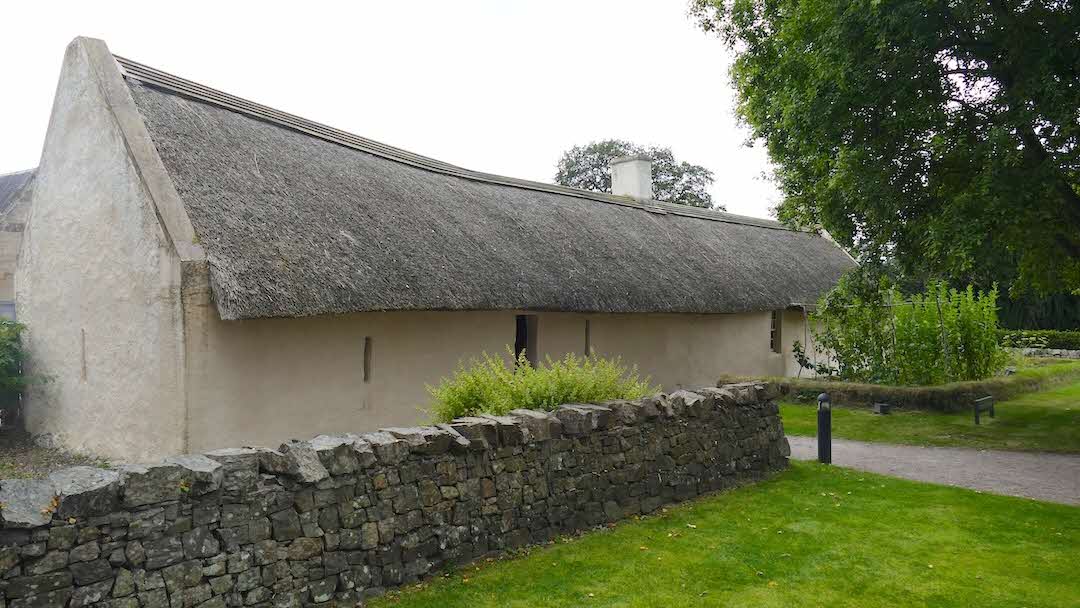 The cottage in which Burns lived until the age of seven
Born in a humble farmer’s cottage in Alloway, on the Ayrshire coast, on 25 January 1759, Robert ‘Rabbie’ Burns achieved international fame for his characteristic Scot’s dialect poetry and lyrics celebrating love, friendship, work and drink. We decided to plan a family trip to the area to discover more about this Scottish national hero.
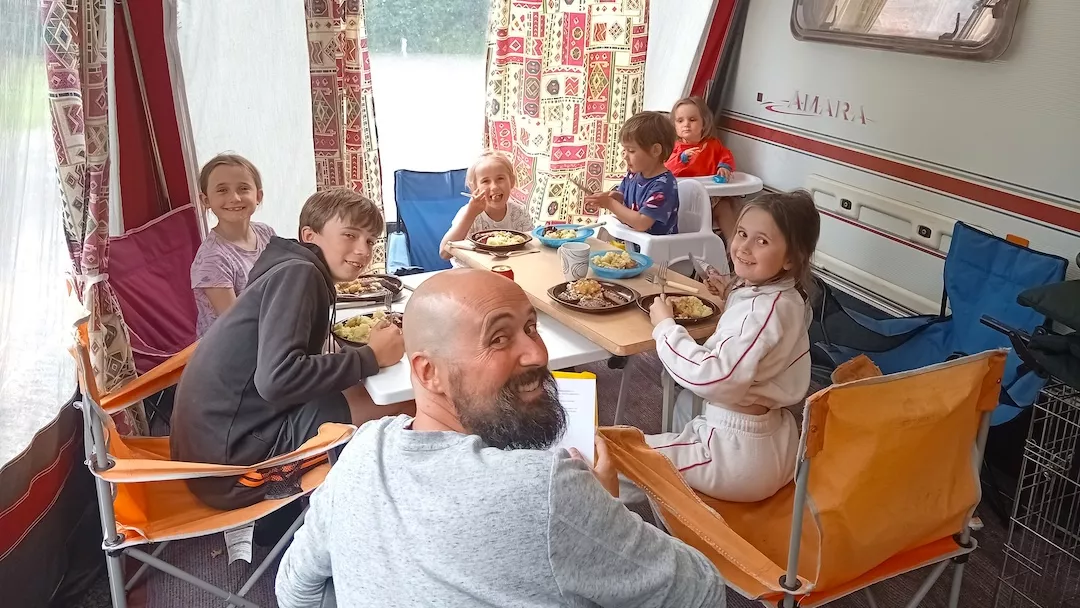
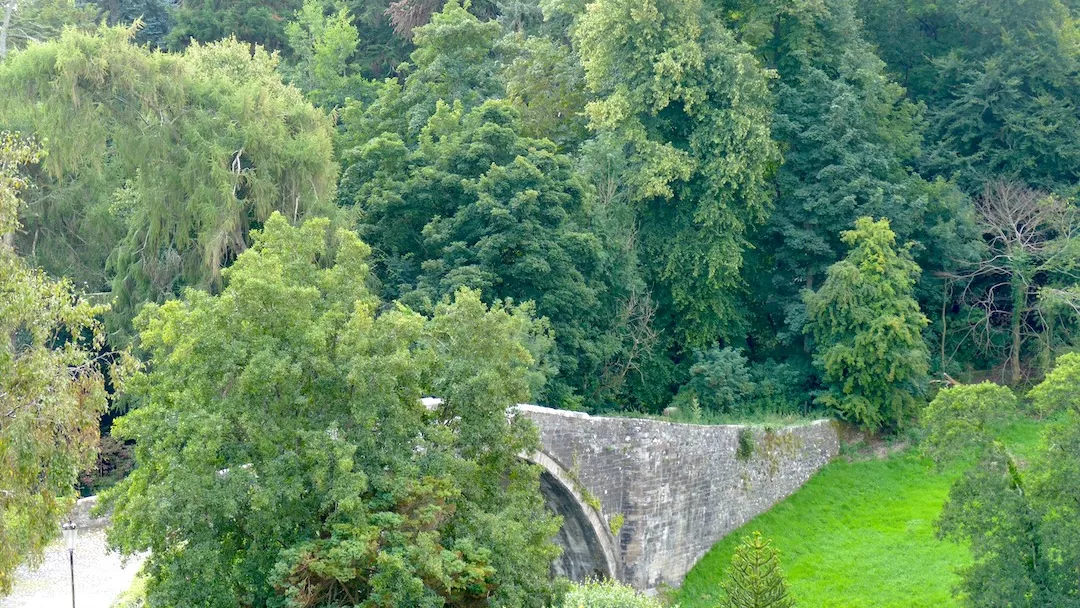
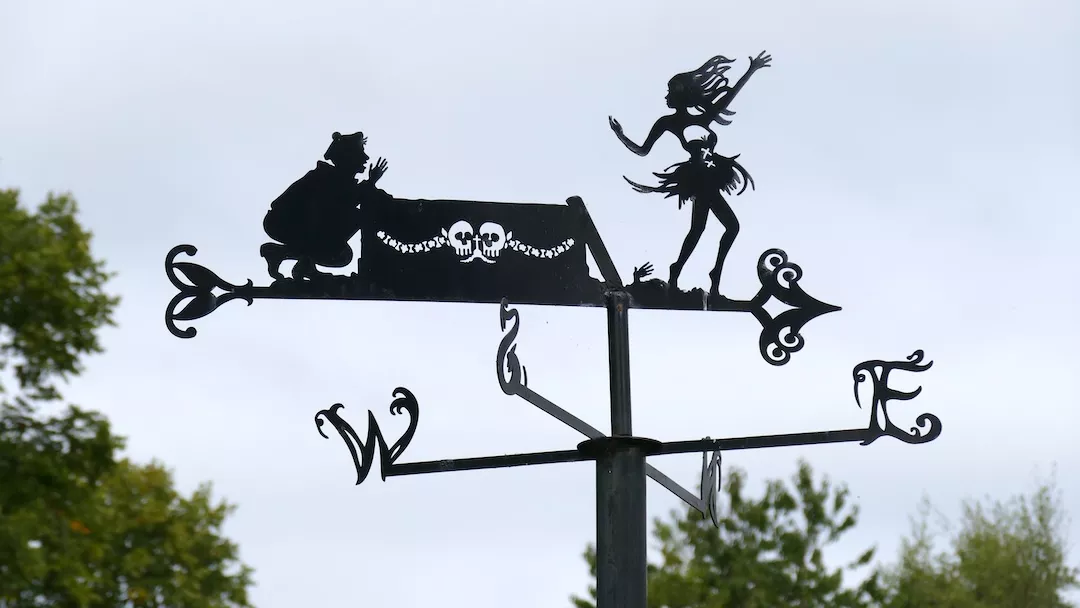
After pitching up on our spacious spot by the play area at Ayr Craigie Gardens Club Campsite, we introduced our children over supper to a translated version of one of Burns’ most famous works, Tam o’ Shanter. In this poem the main character stumbles across a supernatural ceilidh whilst riding home from the pub. Spying as witches dance to the devil’s bagpipes in Alloway Auld Kirk, Tam blows his cover by drunkenly heckling a witch: ‘Weel done, cutty-sark!’ (‘Well done, short skirt!’). The compliment is poorly received, and Tam is pursued by the satanic crowd to the Brig o’ Doon.
He escapes in one piece, as legend has it witches can’t cross running water. Meg, his mare, is not so lucky, and ‘Cutty Sark’ rips off her tail…
Enthralled, and with Tam’s Trail route maps in hand (available at the Robert Burns Birthplace Museum in Alloway), we followed his footsteps along the River Ayr towards Ayr High Street. Starting at the town’s oldest public house, the aptly named Tam O’ Shanter Inn, we toasted Burns before commencing our own, slightly more dignified, journey. This meant following Blue Bonnet trail way-markers past Burns Statue Square, across parkland and towards the haunted churchyard of Alloway Auld Kirk.
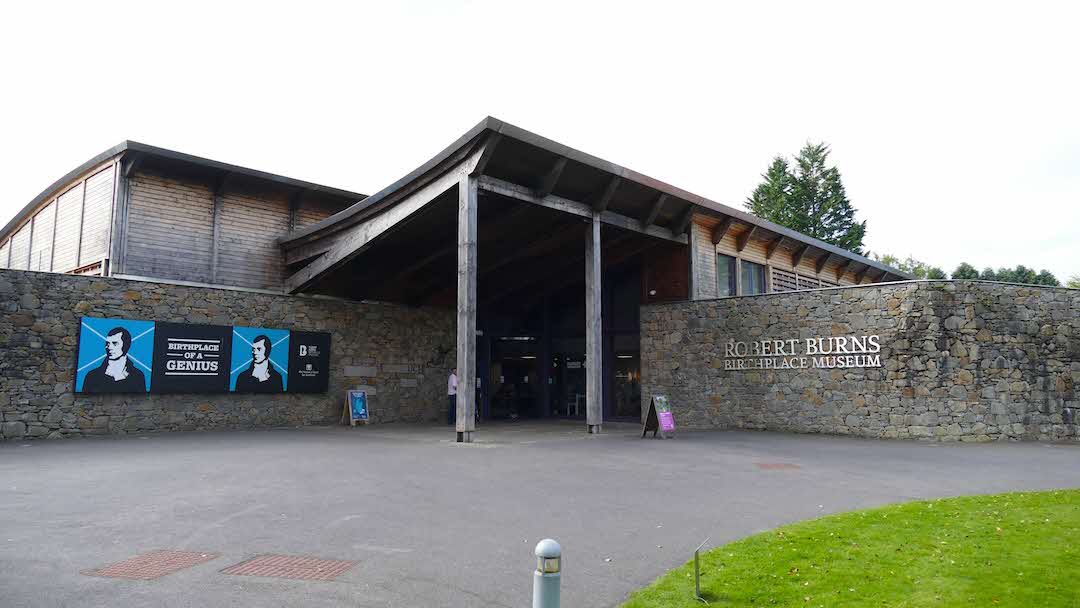 Robert Burns Birthplace Museum
Forced to retrace our steps at the delightful Belleisle Park due to a footbridge closure (Ayrshire Council say repairs are underway) a spectacular sunset over the Old Racecourse highlighted the Isle of Arran’s outline, making up for the lack of spooky encounters that evening. Rex, our trusty steed, was relieved to return with his tail still intact, and we resolved to retrace the second half of the walk the following day from the Robert Burns Birthplace Museum.



The museum is open daily from 10am to 5pm, and despite my reservations that it would hold little to interest my children, it proved captivating. Interactive poetry-themed displays and literary games kept them amused whilst we read some of the poet’s original manuscripts – with some interpretive help from the audio and visual aids − and pored over the gossip surrounding Rabbie’s colourful love life.
I helped the older children complete an activity trail that involved hunting for iconic Burns artefacts to uncover a hidden phrase. Feeling smug that in no time we had cracked the code, we were informed at the museum desk that we had got it wrong!
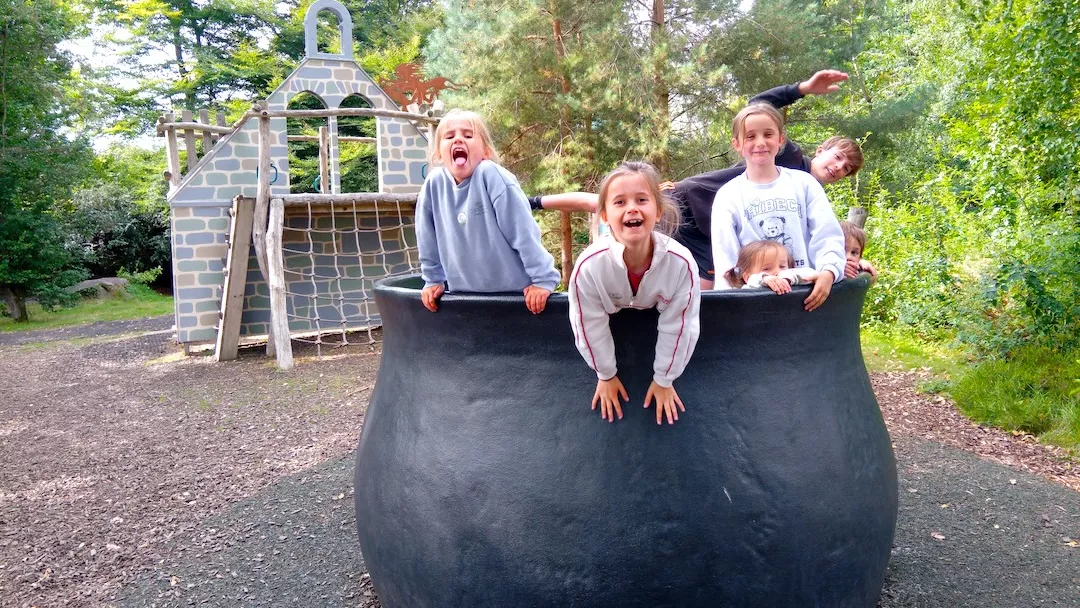
Retreating outdoors, the children took the opportunity to burn off some energy in the Burns-themed play park, complete with a cauldron roundabout, playhouses modelled on Auld Kirk and Burns Cottage, and an old horse-cart slide. A path leads behind the park to the magnificent 70ft-high Grecian-style Burns Monument, which opened in 1823, 27 years after the poet’s death. Climb the staircase to enjoy spectacular views towards the famous Brig o’ Doon.
The next day, on this cobblestone bridge spanning the River Doon, we joined the Alloway Trail, following Blue Bonnet signs once again to the 16th-century Auld Kirk, which proved to be less sinister in the daytime.
After hunting for the graves of Burns’ father and younger sister, we strolled along the pleasant ‘Poet’s Path’, featuring inspired sculptures of a quite-large ‘wee mouse’ and giant granite haggis, to the restored Burns Cottage, where the poet was born and lived to the age of seven. Here, a guided tour revealed the tiny kitchen where the children ate and were schooled, the rooms shared with the family’s farm animals, and the tiny box bed where the four siblings slept. Suddenly the sleeping arrangements in our five-berth caravan seemed luxurious!
The Alloway Trail continued past the Rozelle House Museum and Galleries back to Belleisle Park, where we explored the walled gardens, conservatory and playpark before looping back to the Birthplace Museum. A haggis supper back at the ’van rounded off a wonderful day, complete with an obligatory reading of Burns’ Address to a Haggis.
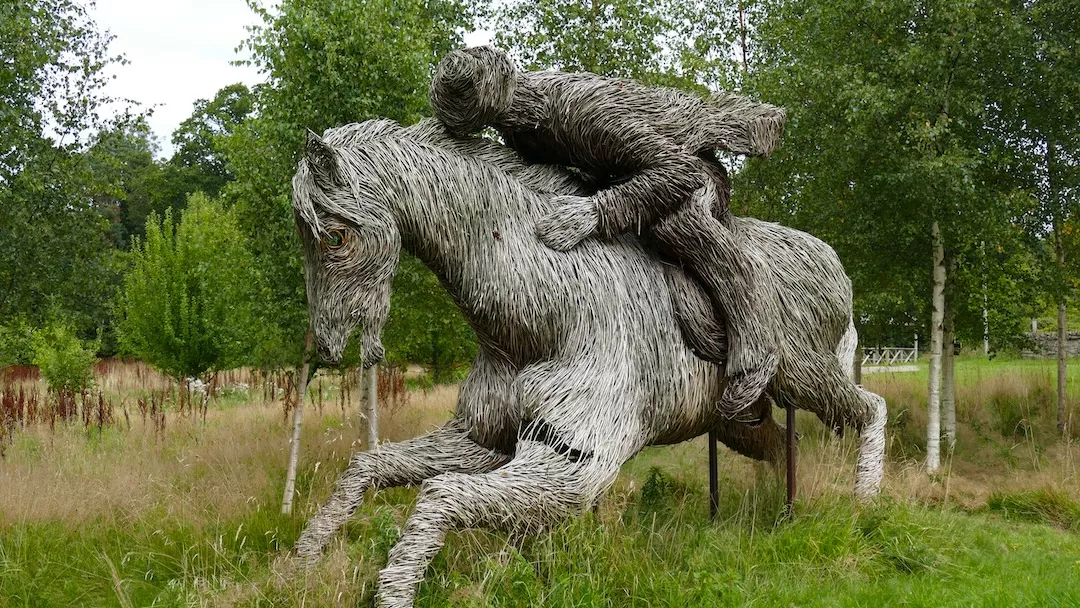

The next day we drove south to Kirkoswald, where Burns was schooled for a period. It was in these parts that he encountered Douglas Graham of Shanter (aka ‘Tam’), a local landowner who apparently rescued the young poet and a friend when they got into trouble at sea near the village of Maidens, and John Davidson, a shoemaker (souter) and the inspiration for Souter Johnnie, Tam o’ Shanter’s drinking buddy and partner-in-mischief.
Our first stop was Souter Johnnie’s Cottage, a quaint, thatched house near The Ranch Affiliated Site. The cottage, as well as being the family home, also doubled as Souter Johnnie’s workshop. In fact, both Davidson and Graham, along with members of Burns’ mother’s family, are buried at the Old Kirk across the road.
Our next stop was Tarbolton, to the north-east of Ayr, where, in a red-shuttered, thatched cottage, Burns co-founded the Tarbolton Bachelors' Club. Meeting regularly with a group of like-minded gentlemen to ‘relax themselves after toil, to promote sociality and friendship, and to improve the mind’, it was here that Burns learned to dance and debate. After a fascinating tour of the tiny, immaculately restored 17th-century cottage, complete with a displayed set of membership rules that would raise a few eyebrows today, we had a debate of our own: where to purchase supper. We settled on Rabbie Burns Fish & Chips, on the basis that it sold both battered haggis and king rib (a Haines family favourite), and was suitably located by the playground on Ayr’s seafront.
During our travels, our attention was drawn continually to the mesmerising views over the waves of Arran’s mountainous silhouette, and it was on our final day, inspired by Burns’ fond poetic references to the ‘auld Scotch drink’, that we caught the early ferry from Troon to visit the island. On landing in Brodick, we embarked on a whistlestop tour of Arran’s spectacular seal-studded coastline before reaching a tiny harbour nestled on the island’s mountainous northern peninsula and our final destination: Lochranza Distillery, birthplace of the only Scotch whisky to be endorsed by the Robert Burns World Federation.
After politely testing some obligatory samples, we queried why the Robert Burns Single Malt was so-named, and were informed that the poet, despite never leaving the mainland, loved looking over to Arran on clear days as he laboured on his father’s farm in Alloway. A good enough excuse to purchase a bottle to toast the great man himself at the end of an unforgettable holiday.
• Dumfries
Burns relocated to Dumfries in later life, and you can now follow the Burns Trail, which visits the poet’s house and the Robert Burns Centre, passing associated landmarks across the town centre. Take a tour of the Globe Inn, Burns’ favourite hawff (haunt) where he frequently met companions to eat, drink, sing and recite until his death in 1796.
Stay: Garlieston Club Campsite
• Glasgow
Rabbie’s presence can be felt throughout the city. The Mitchell Library houses 900 editions of the poet’s works, 15 original manuscripts and his only surviving letter written in Scots. Visit the bronze Burns Statue in George Square before calling at one of his favourite drinking establishments, such as the Black Bull Inn or The Saracen Head.
Stay: Strathclyde Country Park Club Campsite
• Edinburgh
Burns would likely have paid visits to fellow poet Thomas Blacklock, who lived at The Pear Tree House in Edinburgh’s Old Town. The building is now home to a thriving pub a short walk from the Burns Monument on Calton Hill.
Stay: Edinburgh Club Campsite


