Top nature campsites
You’ll be amazed at the variety of animals to spot on some of our Club campsites
View our top nature campsites
As Christmas approaches, David Chapman sets the record straight on our native ivy plant – a vital resource for a wide variety of wildlife
 A barn owl tucked away among ivy
This issue, as many of us prepare for Christmas, I want to reflect on the words of one of our best-loved carols, The Holly And The Ivy. In it we sing, “The holly bears the crown”, which hints at our cultural attitudes towards these two plants.
Although today we are familiar with a Victorian adaptation of the song, it has been around in different forms for several centuries and the lyrics have changed markedly over time. An early related carol showed an even greater contrast in opinion towards each species:
“Holly stands in the hall, fair to behold: Ivy stands without the door, she is full sore a cold.
“Holly hath birds a fair full flock, The nightingale, the popinjay, the gentle laverock.
“Good ivy, what birds hast thou?
None but the owlet that cries how, how.”
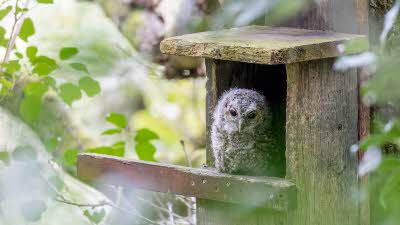
While it is true that holly has traditionally carried a certain prestige, its bright red berries being a sign of fertility, these lyrics misrepresent both the holly and the ivy. Yes, many birds do flock to feed on holly berries in the lead-up to Christmas, but not the nightingale, popinjay (parrot) or laverock (lark), and though the ivy might provide shelter for the odd tawny owl, it is inaccurate to say that it is otherwise devoid of birdlife. Furthermore, a widespread myth not mentioned in the song is that ivy is a parasite that kills trees.
Here are some hard facts. Ivy is not a parasite: it takes in its own nutrients through its roots and generates energy using the chlorophyll in its leaves, using trees and structures simply for support. Ivy does not directly kill trees, though its weight and shading will have an impact on a tree’s growth and might even bring down a dying tree. In fact, I consider ivy to be incredibly important to wildlife throughout the year, and here I will look at its contribution to the ecosystem.
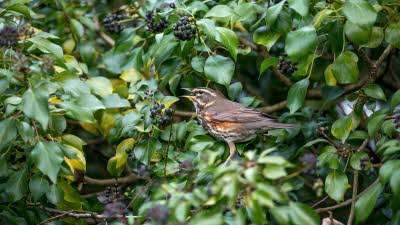
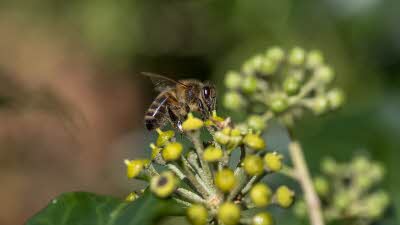
Ivy berries ripen early in the year, when hedgerows offer little in the way of food for birds. Wood pigeons can often be seen or heard crashing their way around ivy-clad trees in their haste to eat as many berries as possible. Blackbirds, mistle thrushes, fieldfares and redwings all take their share too, as do small mammals, including the nimble wood mouse.
Throughout winter, ivy’s dense evergreen foliage provides a safe haven in which birds can roost overnight (some species, such as the tawny owl, will rest within it during the daytime). Many insects, including ladybirds, lacewings and brimstone butterflies, hibernate among the leaves or twisted branches of ivy plants sheltered against a tree or wall. The same leaves offer a vital source of food to browsing animals, notably roe and red deer. The insects hiding in the ivy’s leaves are a vital source of food for many of our smaller birds such as goldcrests and wrens.
Early in spring, before deciduous trees have developed their foliage, ivy offers a sanctuary for our resident birds, such as blackbirds, robins, dunnocks and song thrushes, which are looking for somewhere to nest. Later in the spring they might be joined by summer migrants including spotted flycatchers, which love to nest in climbing plants.
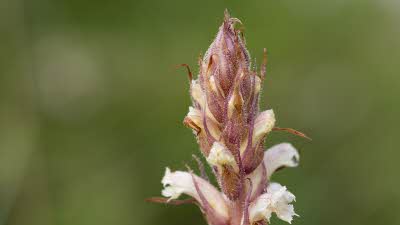
Ivy is a native species and as such our wildlife has evolved over many centuries to make use of it in sometimes unnoticeable ways. Ivy does in fact have its own parasite – the ivy broomrape. This plant has no chlorophyll and therefore cannot exist without a host from which to draw energy.
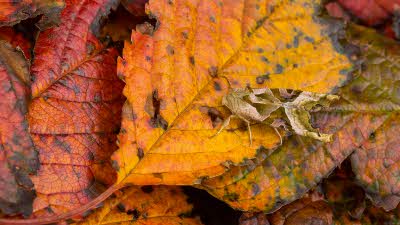
Several types of caterpillar feed on ivy leaves in the summer, including those of angle shades and swallow-tailed moths. One species of butterfly is also dependent upon ivy: the first generation of holly blue caterpillars feeds on holly in the spring, but the second relies on ivy during the summer. This leaves me wondering why we called it the ‘holly blue’ when it could equally be the ‘ivy blue’ – maybe this is another example of our cultural bias.
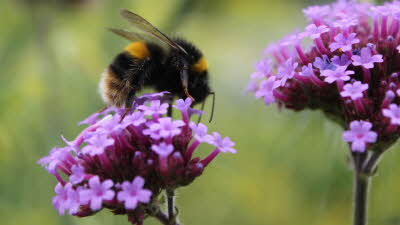
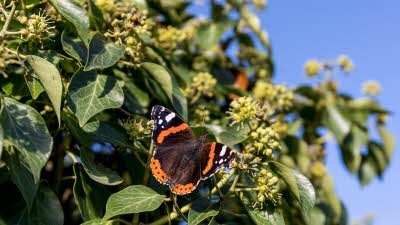
In late summer and autumn, ivy bears pollen and nectar at a time when most other flowering plants are waning. Look at a bank of ivy on a warm, sunny September day and you will witness a spectacle of life. Bumblebees, butterflies, wasps and hoverflies make a literal beeline for ivy flowers, and this bonanza is part of a food chain supporting other creatures.
One particular insect is worth a mention because its association with ivy is reflected in its name. The ivy mining bee is active only in autumn when ivy is in flower. The female makes a burrow, or mine, in which to lay an egg. She then stocks the hole with ivy pollen before filling it in and starting again. They are known as solitary bees because each female has her own hole, but huge colonies can occur on south-facing banks or in sandy soil. First recorded in the UK in 2001, the species is now widespread, and it is a fascinating insect to watch.
So, while there will be times when we need to remove ivy from a specimen tree or maybe the wall of a house, we should make these decisions without the influence of prejudice or folklore. I would argue that, whenever possible, we should give ivy, and all its associated wildlife, a chance.

Every issue I will show you a photo of something from the natural world. It might be a close-up, or a subject that is difficult to identify. All you have to do is figure out what it is! Here is the latest photo; no clues or prizes – it’s just for fun.
I will give you the answer in the next issue, but if you can’t wait, see the Digital Magazine. The subject of October’s mystery photo was: a harvest mouse on corn.