Overseas holidays
More… European campsites than any other UK touring club. Venture abroad and access hundreds of beautiful overseas campsites.
Venture abroad
An unhurried pace led to a superb European trip to Austria via Luxembourg for Nick Harding
How do you plan a three-week, 2,500-mile tour through Europe that allows plenty of time for relaxation? Well, I think we succeeded last summer – with a bit of help, of course. The Club’s Overseas Travel department isn’t just about access to great-value ferry crossings – it works with more than 350 partner campsites in 17 different European countries (each inspected to ensure it meets the standards Club members expect), offers its own emergency assistance and travel insurance product (Red Pennant), and provides invaluable advice and practical information. As members for over 20 years now, it was only natural for my partner Lin and I to book through the Club.
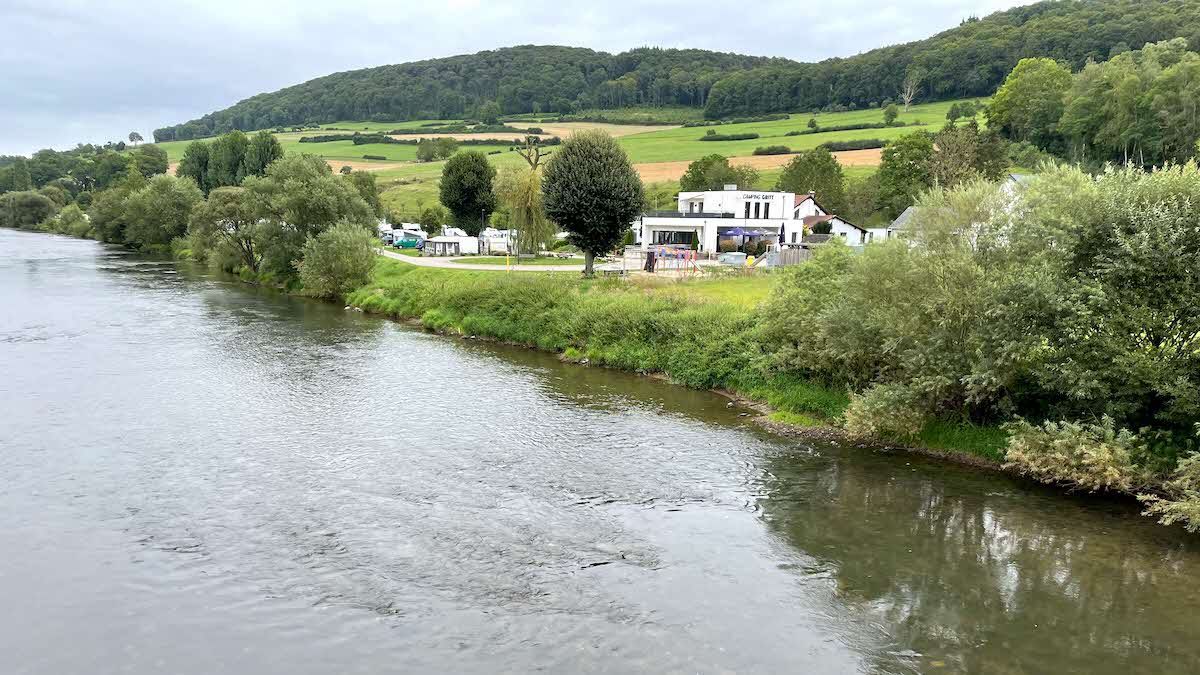 Gritt, Luxembourg (Club ref: H07)
Now, admittedly, in the past my excitement has often got the better of me when planning extended trips. But I have learned from my mistakes, and we make sure that we pace ourselves and set sensible driving times if the tour is extensive. Luckily, both of us are keen drivers and our Volkswagen California campervan is equally happy to eat up the miles – automatic transmission and a well run-in 180bhp engine are a good starting point – but keeping to sensible speeds creates less stress and is better for your overall fuel economy. From the moment we arrived in France, the countries we visited last summer all boasted particularly good road networks, making our longer distance driving all the easier. The key, though, was lots of stop-offs en route to each destination. Remember you’re on holiday – so there’s every reason to take things easy.
Our tour had actually kicked off with a one-night stopover at Slinfold Club Campsite in West Sussex (please note that there is no toilet block). This meant just a leisurely sub-two-hour drive the following morning to Dover for the ferry. It also meant we could organise our timings so we could arrive at our first overseas site – Gritt in Luxembourg – in the afternoon. It was a perfect day’s travelling, in fact.
As a quick aside, take note that, since we left the EU, there are restrictions on what food and drink you can take with you from home into Europe, and on what you can bring back to the UK (see gov.uk/bringing-food-into-great-britain for information).
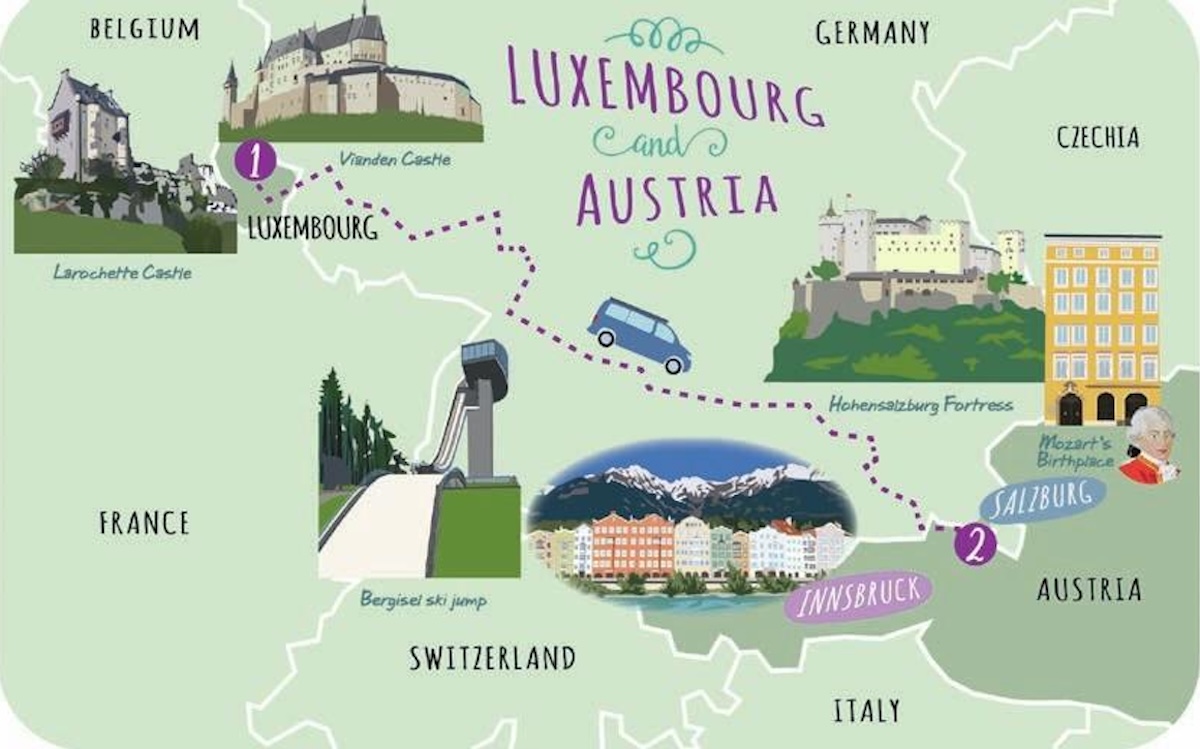
Illustration by Louise Turpin
So with very little in the way of food on board, then, we set off from the port for our first destination. Landlocked Luxembourg is Europe’s seventh smallest country by size, with a total population of less than 700,000 – all of whom get to use buses, trams and trains for free. Ironically, diesel tends to be a bit cheaper here than at home – but being able to hop on and off buses and trains at your whim is the perfect excuse to leave your outfit on site and enjoy some mini excursions.
Gritt campsite’s central location enables visitors to access pretty much anywhere they want within the country, including the capital city. We opted for a day in the pretty town of Vianden, accessible by bus from Ingeldorf, itself just a short walk from the campsite across the River Sûre. Vianden boasts an imposing castle – reached by walking up from the town centre or, altogether more spectacularly, using the chairlift. Once the seat of the influential counts of Vianden, the castle, which was constructed between the 11th and 14th centuries, is an outstanding example of Romanesque and Gothic architecture.
Back in town we enjoyed a beer at one of the riverside hostelries and visited Victor Hugo House – the author of The Hunchback of Notre Dame and Les Misérables stayed in the town on numerous occasions during his career.
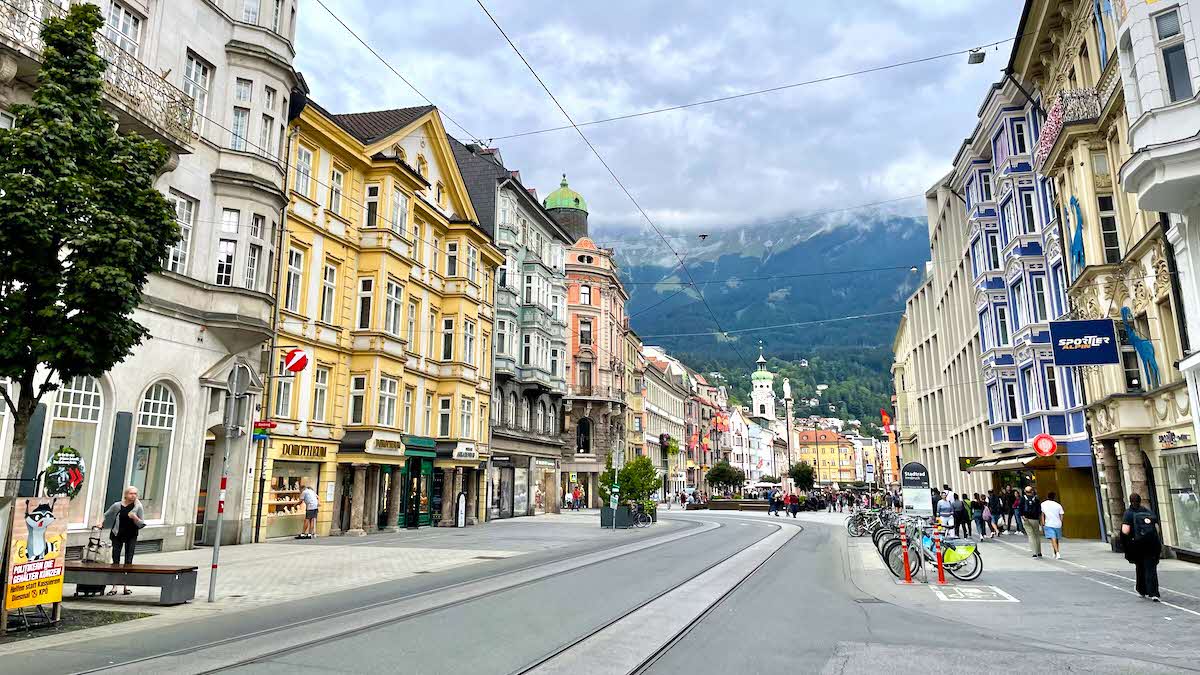 Innsbruck, Austria
It was time to head onwards for Austria, and we’d planned for a whole day’s driving from Gritt to our next campsite, Natterer See (Club Ref: G01). It took just under eight hours to complete the 400-mile journey – a pleasant one due to Europe’s easier roads and also our routine of taking it in turns to drive and stopping for a break every two hours.
Austria’s mountain scenery is every bit as spectacular as the brochures suggest – and Natterer See, surrounded by pine forest on the edge of a lake, is a great showcase. Almost fully booked when we were there, it’s a top-quality campsite with one of the best amenities blocks we’ve ever come across. Imagine personal washrooms, washing-up areas with dishwashers and a design that looked so modern and clean I couldn’t believe it was nearing 20 years old. An array of water-based activities is available, while there is a tip-top restaurant looking out across the lake.
The city of Innsbruck is just seven miles away, reachable by public bus from the site entrance. We spent a fantastic day visiting attractions including Ambras Castle, the famous Olympic Bergisel ski jump and the Tirol Panorama Museum – home to a giant 360˚ 1,000-square metre canvas depicting the Tyrolean Rebellion of 1809.
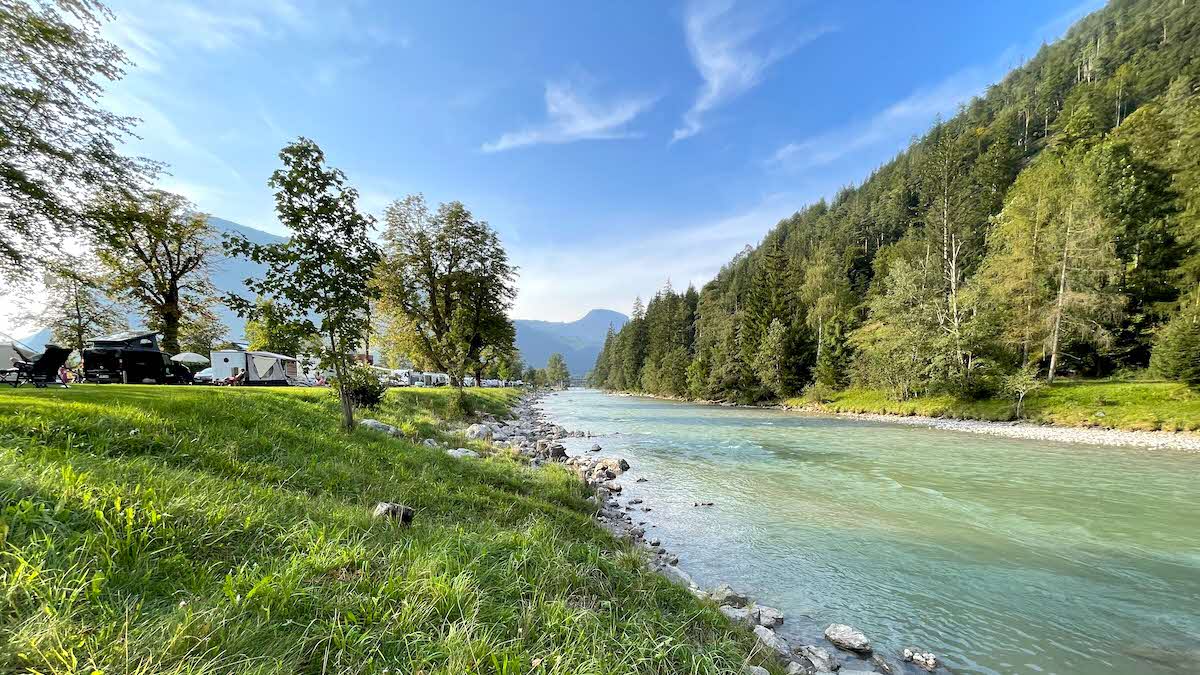 Camping Grubhof, Austria (Club ref: G04)
Our next stop was at Camping Grubhof, about 75 miles to the north-east, close to the border with Germany. Another beautifully-located site, it’s within easy reach of Salzburg – famously the birthplace of Wolfgang Amadeus Mozart.
We were impressed by Innsbruck, but we enjoyed Salzburg even more. It took around an hour to get there on the bus – the stop is pretty much at the end of the campsite drive. Our first point of call was Mirabell Palace and Garden, where we enjoyed an al fresco coffee in the sunshine while we planned the rest of our day.
We then whizzed up to Hohensalzburg Fortress using the ‘FestungsBahn’ – the oldest working funicular railway in Austria – not just for the amazing 360˚ views of the city, but also to enjoy its many museums. These include the Marionette Museum, the Museum of the Rainer Regiment and the Fortesss Museum, the latter showcasing the history of the stronghold and containing fantastic displays of weaponry, armour and military musical instruments.During your visit to Salzburg do try to make time to visit the Mozart Residence and his Birthplace Museum – where you can see the great man’s own instruments including his grand piano and concert violins.
Grubhof turned out to be our favourite campsite of the trip, mainly because of its green, open spaces. Again, the amenities blocks were simply stunning. Indeed, we were so impressed with the whole set-up we decided to stay an extra night.
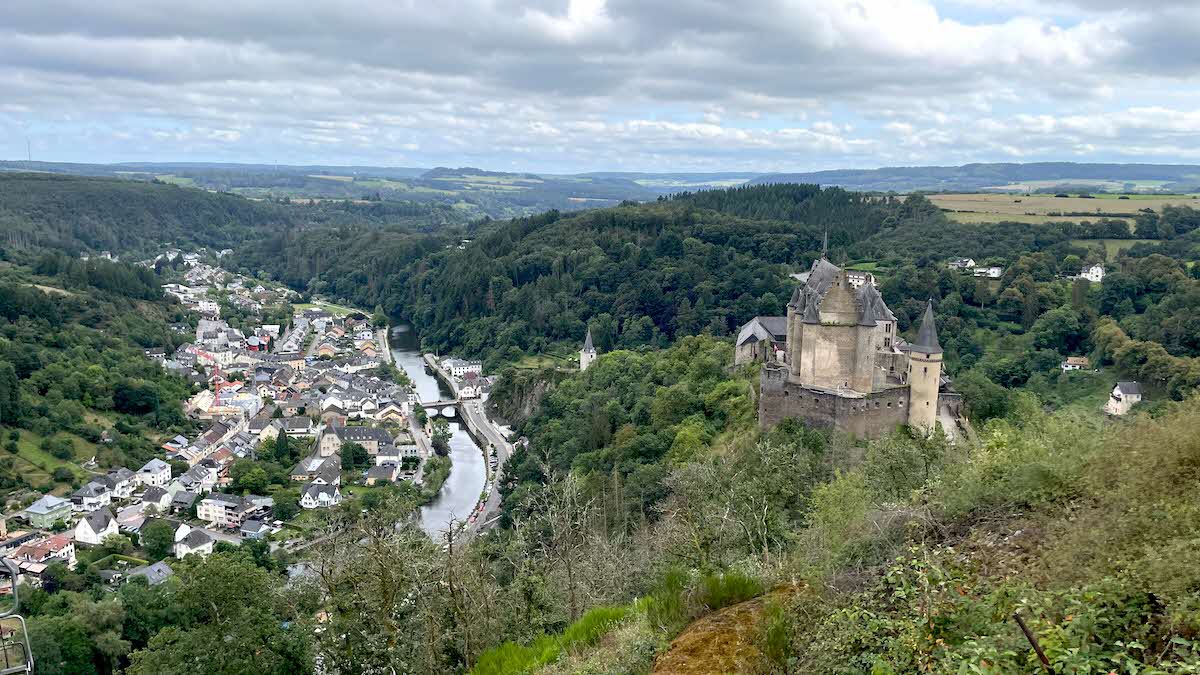 Vianden, Luxembourg
Nommerlayen campsite, in Luxembourg’s Mullerthal region (sometimes called Little Switzerland), marked the final stop on our trip, chosen because it was a manageable four hours from Calais for the ferry home. Also, I’m happy to admit, because its extensive facilities included an on-site restaurant – ideal after another day’s driving. There’s plenty of good walking to be had in nearby Nommerlayen Forest and, this being Luxembourg, you’re never too far from a castle – Larochette, for example, is just a 10-minute drive away.
Sadly we had barely scratched the surfaces of Luxembourg and Austria – but leaving yourselves something to come back to is part of touring life!