Great Savings Guide
Members receive great savings at over 900 attractions through the UK and Ireland
Start enjoying great savings
Jonathan Manning tries his hand at an ancient craft and creates a work that should last an eternity
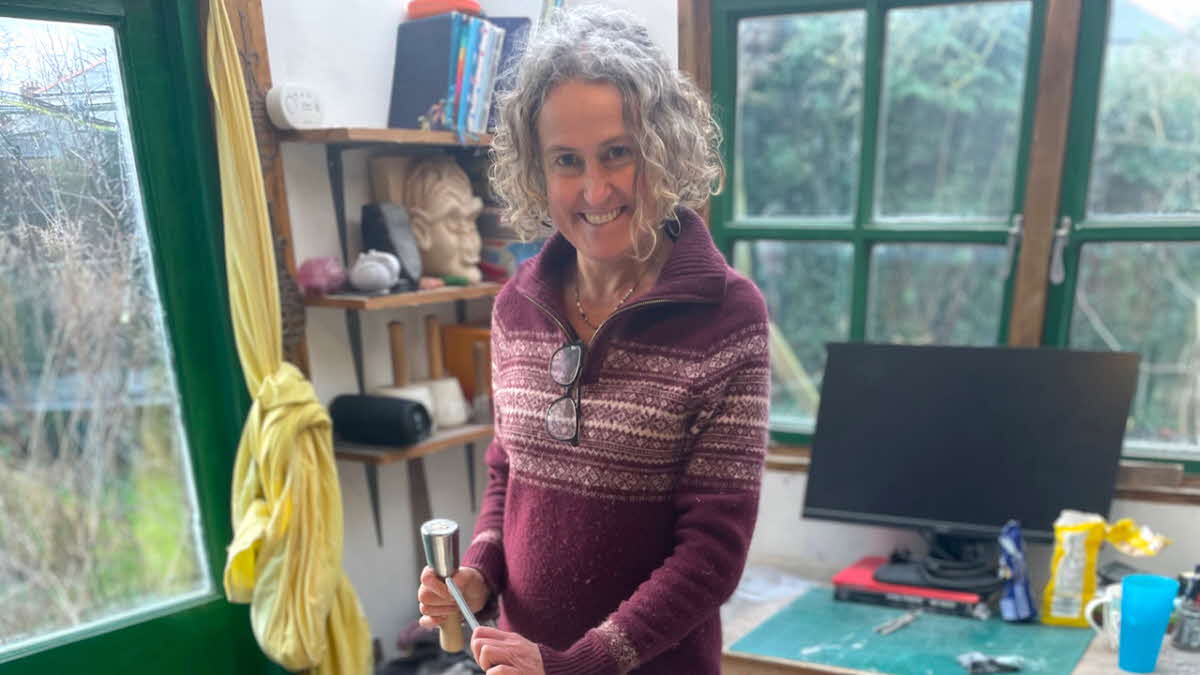 Instructor Jane Turner
During the astonishing five-year reconstruction of Notre-Dame in Paris following its devastating fire, a team of stone sculptors took up residence in a large hall at the foot of the cathedral. These skilled workers restored decorative stones, gargoyles and sculptures, following in the footsteps of master craftspeople from the 12th and 13th centuries.
Many were members of France’s Compagnons du Devoir, an elite guild that can trace its roots back to the Middle Ages. What’s remarkable is that their tools and skills have barely changed in the intervening centuries.
As television cameras swooped inside and outside the revamped cathedral, capturing the breathtaking beauty of the building, it was the stonework that stole the show. Pillars, vaults and sculptures showcased the skill of artisans who had deployed the dexterity of surgeons to return the magnificent building to its original glory.
Even today, those training for stoneworking trades in France can start as young as 13 or 14 years of age, before completing a three-year vocational baccalauréat diploma. But to join the Compagnons du Devoir requires several years more service, touring France and learning from experienced masons.
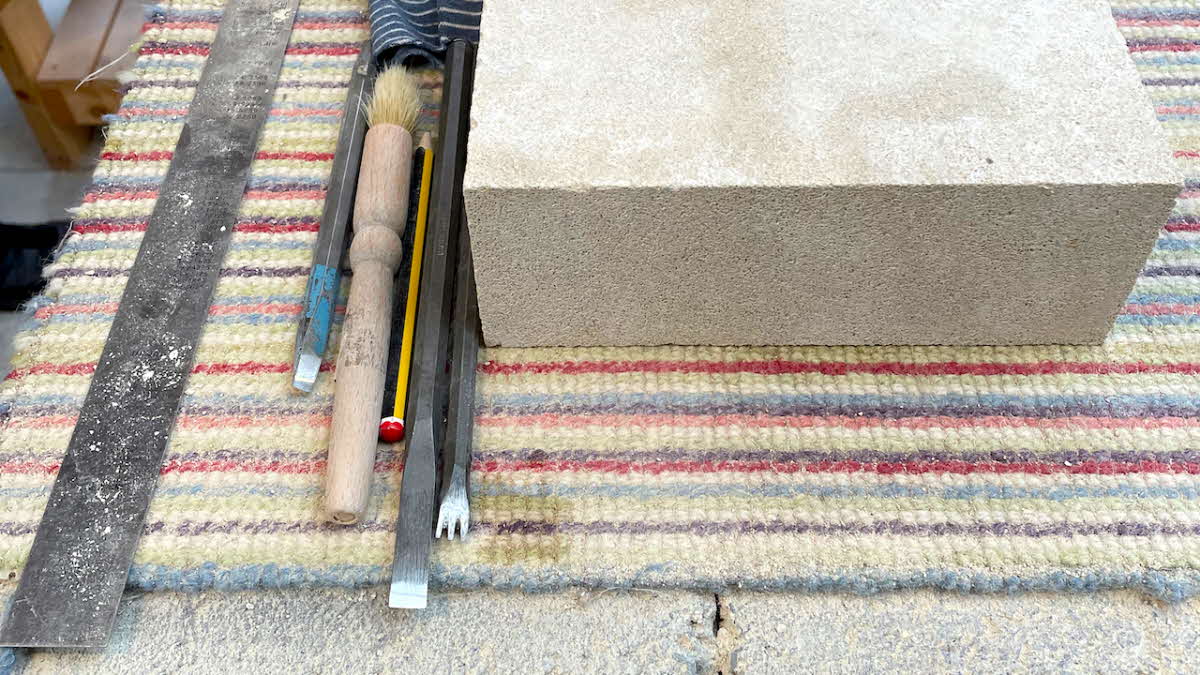 Tools of the trade
So, my expectations of what can be achieved in a six-hour stone-carving course for beginners are about as high as they would be for a six-hour introduction to the cello. I’m no more likely to be sculpting a gargoyle than I am to be playing Mozart by the end of the day.
Yet there’s something irresistible about the opportunity to create something that could last for eons – stone will not rot, perish or corrode. There’s also an element of pressure associated with stoneworking. Make an error and it’s evident for all eternity. No sanding or polishing can fix a blunder – accept the flaw, change the design or start again!
Despite this jeopardy, five of us have gathered with ambitious ideas in a light-filled garden workshop in Abergavenny. The nearest Club campsite at Pandy is only six miles away, and one of my fellow students is a Club member, too.
Our instructor is Jane Turner, a hugely talented stone carver and letter cutter, who has already laid out everything we need on work benches: a specialised ‘dummy’ hammer, three chisels, a brush and a pencil, alongside a hefty block of stone. Rewind a thousand years and this workshop could have looked roughly the same, just without the lights, kettle and woodburning stove.
Jane presents us with a variety of designs from which to choose. I opt for a flower, which will turn out to be a blessing and a curse – with five petals to carve, there’s a noticeable improvement between my first and fifth attempt, but then the temptation arises to attempt to improve the earlier efforts.
Knowing when to stop and accept flaws is key, given the constant risk of acting like a novice hairdresser trying to level a fringe until there’s no hair left!
We’re working with Bath stone, a limestone with a delicate honey colour, formed below warm, tropical seas over 160 million years ago. It’s freshly quarried, which means it’s soft due to its moisture content. In a decade’s time we’d need a jackhammer to make a mark on it, but today the chisel doesn’t even need the weighty hammer to slice off slithers of stone.
Once we’ve traced the outlines of our designs onto the stone using our pencils, Jane demonstrates how to wield the chisel. Only the leading corner cuts, and it requires remarkably little force.
This may sound obvious, but it comes as a revelation that we don’t carve our shapes, but instead carve away the stone surrounding them until the design emerges.
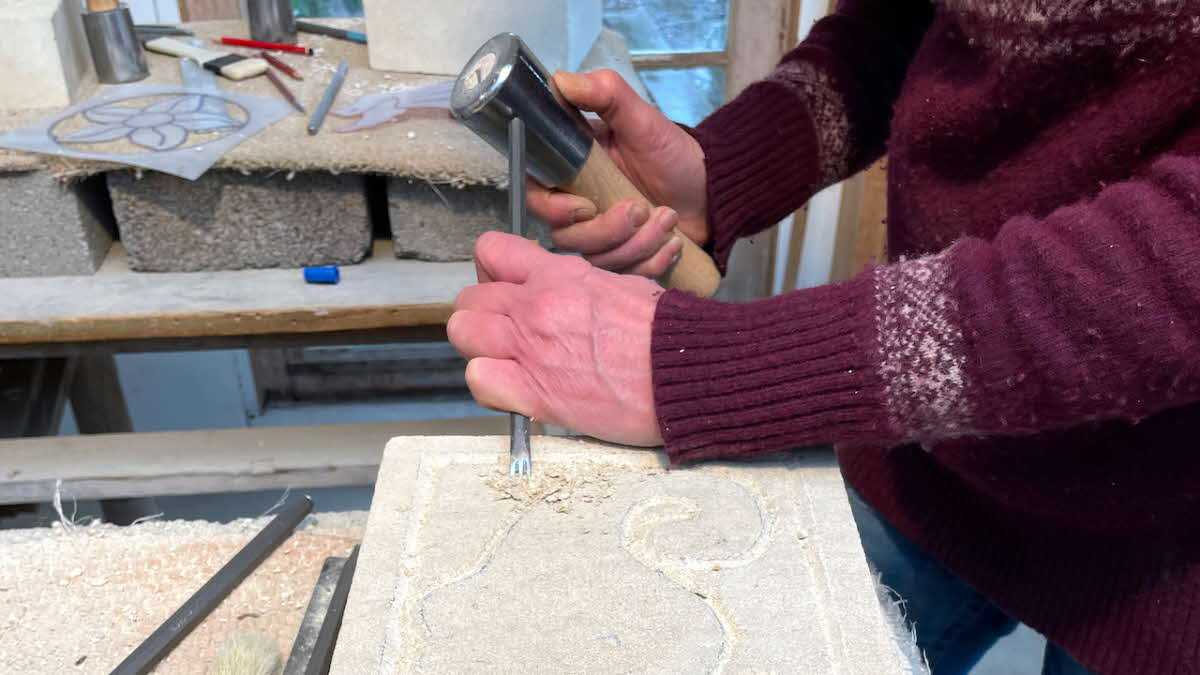
Cautiously, I cut grooves around the perimeters of the petals and then use a claw chisel to carve away the stone outside them. It comes away easily, although cutting it to a consistent depth and getting right into the corners is challenging.
I’m mindful, too, that one clumsy tap could transform my flower into the kind of bloom that languishes in the bottom of the florist’s bucket at the end of the day. Against the white noise background of five carvers rhythmically tapping, the process is utterly engrossing.
By lunchtime, the rough outline of my flower stands proudly from its stone block. Time now to shape the petals, so that each looks as if it tucks under the next. Each petal will also have to arc gently down to the disc-like centre of the flower.
It takes Jane seconds to perfectly shape the first half of a petal, after which it’s my turn. By the fourth petal I feel as if the chisel is vaguely doing what I want it to do, but this simply highlights the shortcomings of the earlier attempts. So, I patiently work my way around all the edges again, trying to create curves event though my carving appears only to move in straight lines.
As the end of the day approaches, I smooth the edges of the block, sandpaper the carving, then hose the whole thing down.
Last year, a technician at a museum in Munich smuggled his own painting into the gallery and hung it alongside the official exhibits. There’s no danger of me trying to sneak my carving into Notre-Dame, but it does now have pride of place in my study, the first thing I’ve ever made that will last forever.
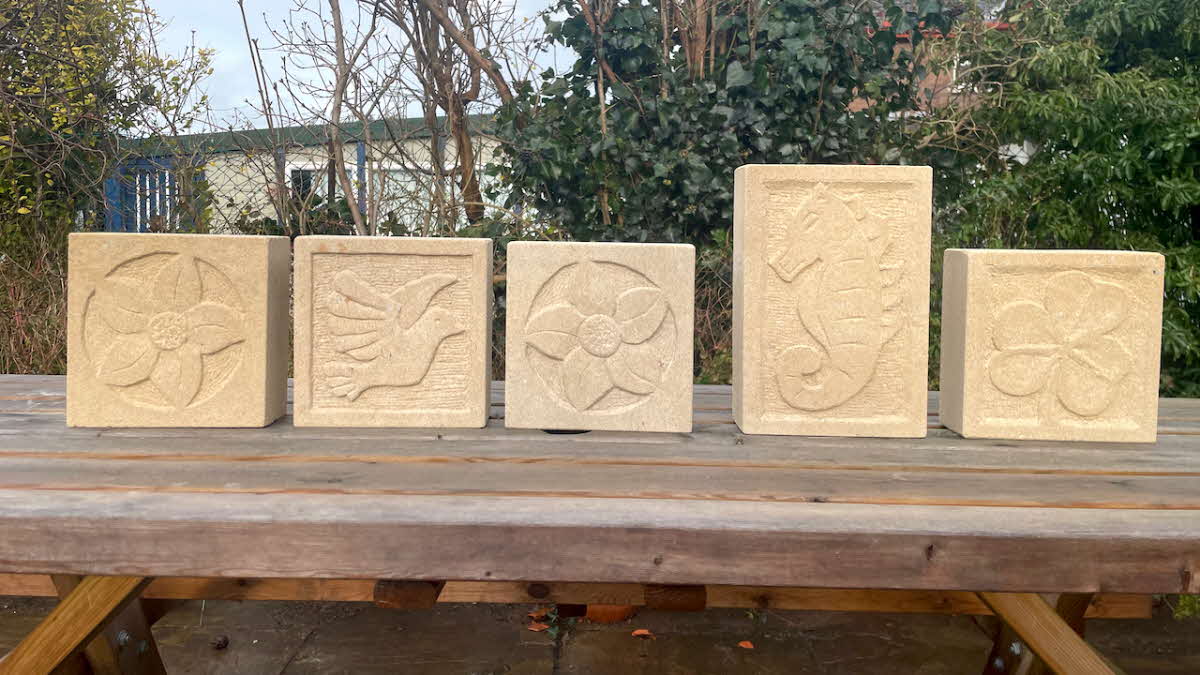 The five blocks carved by course participants
A one-day stone-carving course with Jane Turner costs £140, with all materials included.
Contact: craftcourses.com for details and to book
Stay: Pandy Club Campsite