
Top nature campsites
You’ll be amazed at the variety of animals to spot on some of our Club campsites
View our top nature campsites
David Chapman shares tips for spotting a kingfisher, and dives into this much-loved bird’s mythical roots
 A kingfisher emerges from a dive with a minnow while a second fish takes evasive action
Standing by a lake, I hear a thin, high-pitched whistle. It sounds like one of those whistles used to train dogs, but there are no canines to be seen. There it goes again – and this time it’s getting closer. Then a flash of brilliant blue, low across the water. I try to keep my eye on this teal-hued dart as it disappears into waterside vegetation, but it is never to be seen again.
It was a kingfisher, and my experience was typical of encounters with this beautiful little bird. I use the word ‘little’ quite deliberately. We are all very familiar with the appearance of a kingfisher because it is one of those iconic species that often makes it into the pages of magazines. But those photos often give a false impression of the bird’s size. In reality, it is very small – about the size of a sparrow – and it tends not to come very close.
Plenty of anglers reading this article will have observed kingfishers close up, and even seen them land on their fishing rods. There are two good reasons why fishing enthusiasts get better views than the rest of us: they sit quietly in appropriate places for hours on end, and they offer the perfect perch (and I’m not talking about the fish!).
 A kingfisher is perfectly shaped for diving
Kingfishers are very focused and single-minded. If they see a perch in a nice position over the water they will gladly rest on it and won’t necessarily notice a person nearby, especially if they are in camouflage. They also take readily to newly positioned perches, which offers great opportunities for wildlife photographers.
Kingfishers usually start breeding from late March but during a mild winter it can be as early as February. Either way it will be a busy time for this feisty, territorial bird.
After establishing a breeding site near a sandy riverbank, the mates will dig a tunnel (up to one metre deep), in which they will lay their eggs. A brood usually contains between five and seven eggs, and the pair will generally raise two or three broods each year, digging out a new tunnel for each one. It is believed that the kingfisher pair will sometimes need 100 small fish per day to feed their youngsters, so it is easy to imagine the unpleasant smell that engulfs a well-used nest!
 This kingfisher’s nictitating membrane is closed for eye protection
Kingfishers are one of the easiest birds to distinguish – their breasts are fiery orange, they have creamy white flashes on the chin and neck, and the rest of their plumage is blue. And given a good view, it is simple enough to pick out a male from a female. The main difference is that a male has a black beak, and the base of a female's lower mandible is orange.
In fact the blue we see on a kingfisher isn’t created by pigment; it is an illusion of light refracting through the microscopic structure of its feathers. We call this phenomenon ‘structural colouration’.

The kingfisher certainly lives up to its name. This tiny bird can dive straight down into the water at about 25mph. Judging the refraction of light through the surface of the water, it will pinpoint a fish, catch it and return to the surface in the blink of an eye. In fact, its eyes have nictitating membranes – semi-translucent protective covers that offer protection during a dive. Other key adaptations lie in its streamlined shape and pointed beak, which allow a smooth transition into the water.
While the kingfisher’s common name needs no explanation, its scientific name, Alcedo atthis, points to a rich mythological association. The family name ‘Alcedo’ has the same origin as the word ‘halcyon’, and both are derived from the Greek mythological character, Alcyone, a moon goddess. It is said that she gave protection to fishermen from winter storms; traditionally during the period around the winter solstice that was free of storms, which became known as the Halcyon Days.
The story continues that Zeus defied Alcyone’s control of the weather, sending a thunderbolt which destroyed the ship carrying her husband, Ceyx, who was killed. In her grief Alcyone threw herself into the sea; instead of drowning she was immediately transformed into a kingfisher.
Unlike Alcyone, we can be fairly certain that kingfishers – problematically for them – have no control over the weather. They find it difficult to catch fish when the surface of the water is made choppy by wind and they have no chance of fishing if the water is frozen.
This is why many kingfishers venture down to estuaries, where conditions are milder, during winter. In fact, it isn’t uncommon to find kingfishers around the coast, fishing in rock pools and harbours over winter. As these places suffer a shortage of perches, you are more likely to see them hovering before plunging into the water.
It’s always a privilege to see a kingfisher. Remember: when you are beside a river, listen for a dog whistle and keep your fingers crossed that there aren’t any dogs around!
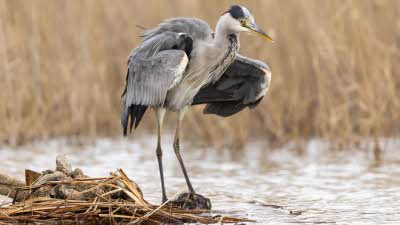
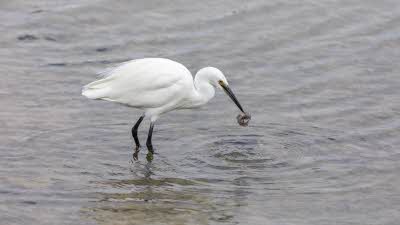
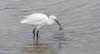
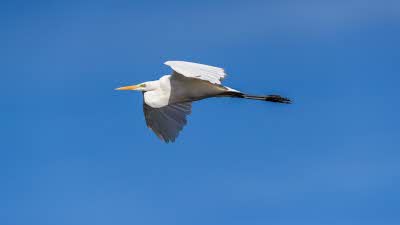
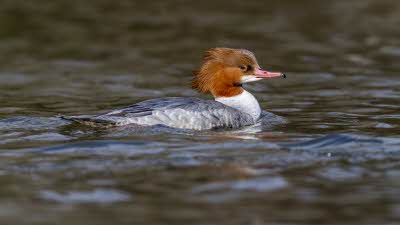
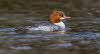
There are plenty of other birds vying for the title of ‘King Fisher’, including:

Every issue I will show you a photo of something from the natural world. It might be a close-up, or a subject that is difficult to identify. All you have to do is figure out what it is! Here is this month’s photo; no clues or prizes – it’s just for fun.
I will give you the answer in the next magazine, but if you can’t wait, check out the Digital Magazine. The subject of November/December 2025’s mystery photo was: a brambling male in snow.