Outdooractive
World leading outdoor app helping you plan, track, and share activities! Save €10 on first year subscription.
Find out more
Anna Haines highlights a selection of coastal spots in the UK which are notable for their biodiversity
From sweeping dunes to soaring cliffs, the British coastline is an intricate mosaic of unique landscapes, home to many rare and much-loved species. With Club campsites conveniently located overlooking the sea or nearby, why not explore them during your next caravan or motorhome getaway? Here is a selection of places to consider...
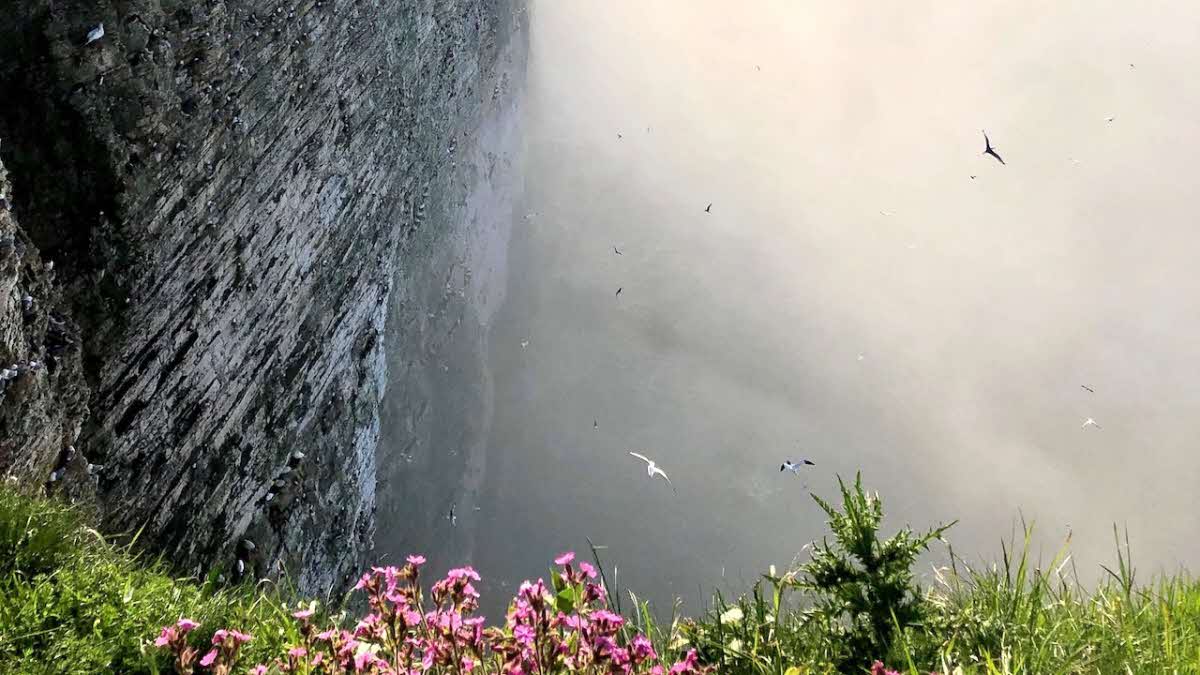 Fog below cliffs. Photo © Ivan Nethercoat, RSPB
Towering 400ft above the North Sea, Bempton’s magnificent chalk cliffs (pictured) are home to ‘England’s largest seabird city’. Half a million seabirds gather to mate, build nests and raise young on these perilous precipices, joining dolphins, porpoises and minke whales to plunder the rich waters below.
Directly above the clifftops, the RSPB’s viewing platforms offer fantastic opportunities to experience the sights, sounds and smells of this seabird spectacle year-round. Puffins, guillemots and razorbills burrow on the ledges during early spring, joined through the season by the UK’s largest population of kittiwakes, as well as the only mainland colony of gannets in England.
Bempton Cliffs have had their share of unusual visitors over the years, including an albatross who, after being blown off-course, took up residence with the 30,000-strong flock of gannets between 2020 and 2023. According to the RSPB’s Ivan Nethercoat, “the gannets weren’t best-pleased, but ‘Albie’ seemed to enjoy their company, and eventually they came to tolerate him!”
Bridlington Club Campsite, a gently sloping site on Flamborough’s headland, is a short bus ride from Bempton village and the nearby RSPB visitor hub. For a more hands-on experience, the RSPB runs gannet-feeding boat tours from Bridlington on The Yorkshire Belle throughout August.
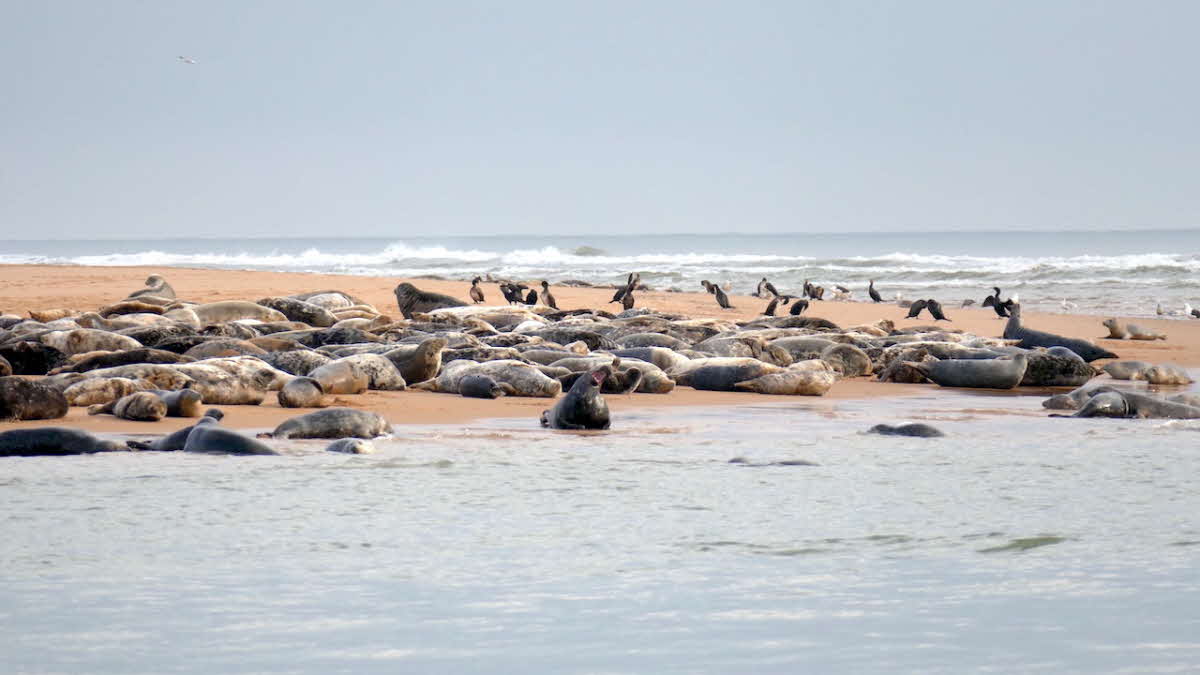 Seals at Ythan Estuary. Photo © Anna Haines
Hordes of grey and common seals gather on a secluded beach to rest, breed and nurse their pups in a 3,000-strong haul-out at Forvie NNR. Winter sees peak numbers, with basking seals covering every inch of the sandbar on the mouth of the River Ythan, while the river itself teems with gliding mammals and their young as they play and hunt for fish.
Accessible viewing platforms overlook this spectacular scene from the beach across the river at Newburgh. Last October, our family spent hours here, marvelling at the seals playing in the water. They seemed to find us equally entertaining, bobbing up from beneath the waves to watch us metres from where we stood. The seal haul-out can also be admired from the Dune Trail, a 5.5km circular route exploring the southern section of Forvie NNR, although it is vital that the seals and their pups are not disturbed.
Just 45 minutes’ drive north of Stonehaven Queen Elizabeth Park Club Campsite, the 1,000 hectares of dune, heath and estuary habitat at Forvie also provide sanctuary for birdlife. It is home to Scotland’s largest mainland tern and gull colony, vast numbers of wading birds – including lapwing and golden plover – and migrants such as geese, eider and whooper swans in the late summer and autumn months.
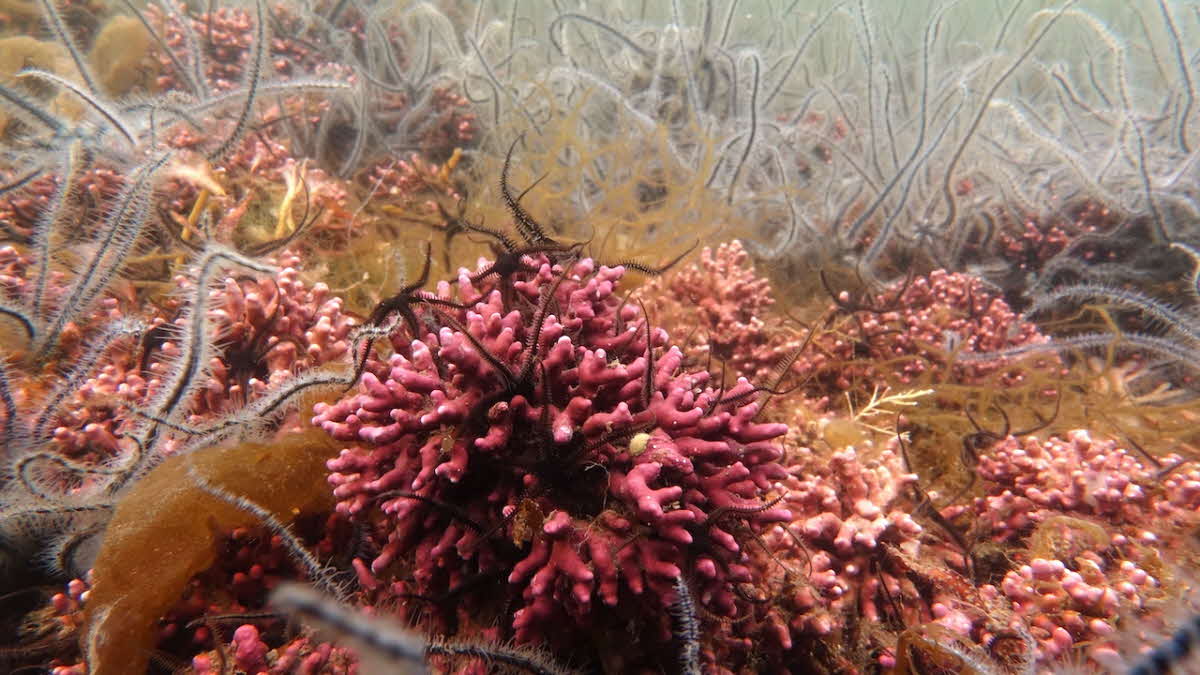 Maerl. Photo ©HowardWood&COAST
While the word ‘reef’ may evoke images of tropical seabeds alive with colourful corals, Britain’s cooler waters do in fact support some equally wonderful reef habitats.
Lamlash Bay is home to Scotland’s first No Take Zone (NTZ) – a protected marine area from which no extraction is allowed. It hosts the country’s largest live maerl bed: a hard pink seaweed in which an array of small sea creatures feed and hide from predators. Along with seagrass, kelp forests and underwater boulder habitats, Lamlash’s seabed sustains some truly special inhabitants, including curled octopus, pipefish and some hefty lobsters! Since the introduction of fisheries measures at Lamlash (2008) and the wider South Arran Marine Protected Area (2016), species richness in these waters has doubled, with a massive increase in king scallop density alone.
If you stay at Ayr Craigie Gardens Club Campsite on the mainland, a ferry crossing offers ample opportunity to encounter Arran’s living seas. The Community of Arran Seabed Trust (COAST) invites visitors aboard the RV COAST Explorer to become citizen scientists, helping with ongoing maerl bed mapping in the NTZ while spotting dolphins, porpoises and, on a calm day, basking sharks! COAST also organises shore scrambles at low tide to uncover beasties dwelling along the shoreline.
However, the best way to encounter Arran’s rich marine life is below the waves. You could embark upon the island’s snorkel trail, checking off the species you encounter, including starfish, urchins and anemones. COAST offers snorkel taster sessions, and be sure to spend some time at the COAST Discovery Centre at Lamlash which celebrates the organisation’s history and successes, allowing visitors to see creatures from Arran’s waters within marine life tanks.
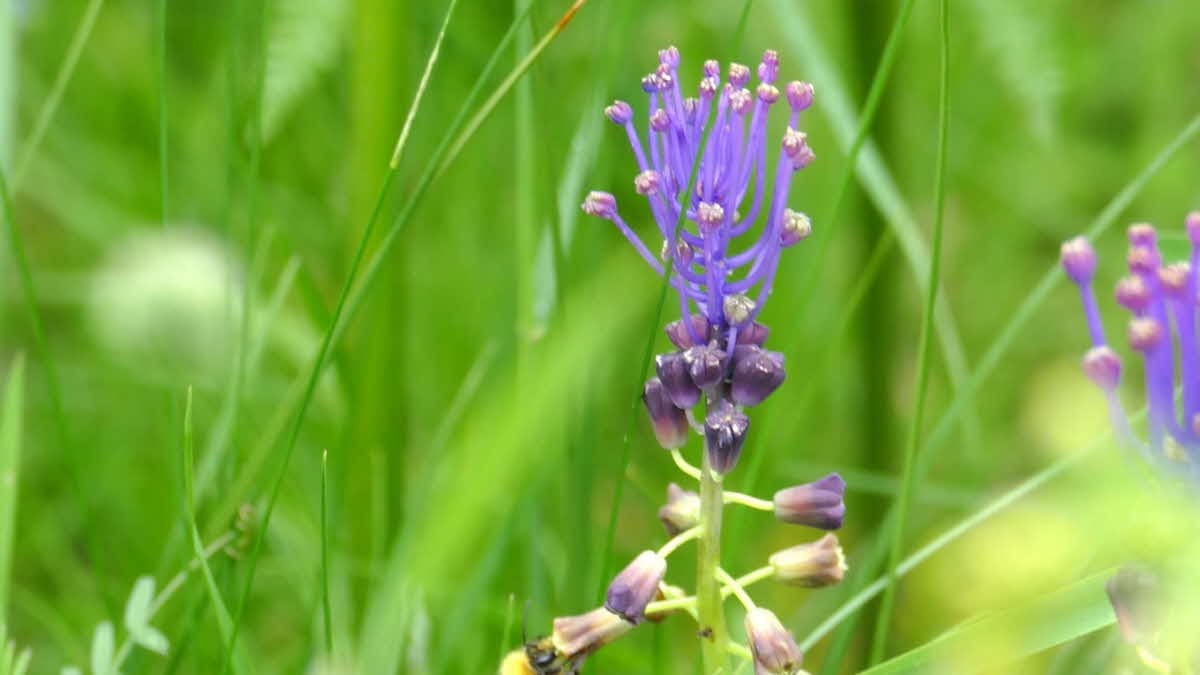 Wildflowers in dune slacks sustain pollinating insects. Photo © Anna Haines
Ancient sand dunes ascend from the shell-strewn shoreline of the Duddon Estuary, commanding panoramic views of distant Lakeland fells. The pristine, 400-year-old system at Sandscale Haws, along with neighbouring dunes at Walney Island, is Europe’s last stronghold of the charismatic yet rowdy natterjack toad. Breeding in dune pools, male toads serenade females at dusk with a croaking cacophony heard for miles around.
Internationally recognised as important habitats for wildlife, dune systems are under constant threat across Europe due to development, invasion from non-native species and, critically, the stabilisation of sand over time leading to grassland formation. Hand-in-hoof with herds of hardy conservation cattle grazing the dunes, volunteers and reserve staff work tirelessly to improve these habitats for natterjacks. Cows tackle encroaching hawthorn and gorse, cropping taller vegetation to produce ideal foraging habitats for the toads, while creating space for summer explosions of wildflowers, including rare orchids such as the dune helleborine.
Take a trip across to the Duddon Estuary while staying at the peaceful Club campsite at Meathop Fell and follow the waymarked natterjack toad walk around North Walney Nature Reserve’s breeding pools. Although spring evenings are the best time to appreciate the natterjacks’ chorus, National Trust ranger-led wildflower walks also run throughout the summer at Sandscale Haws if you would like to learn about dune flora.
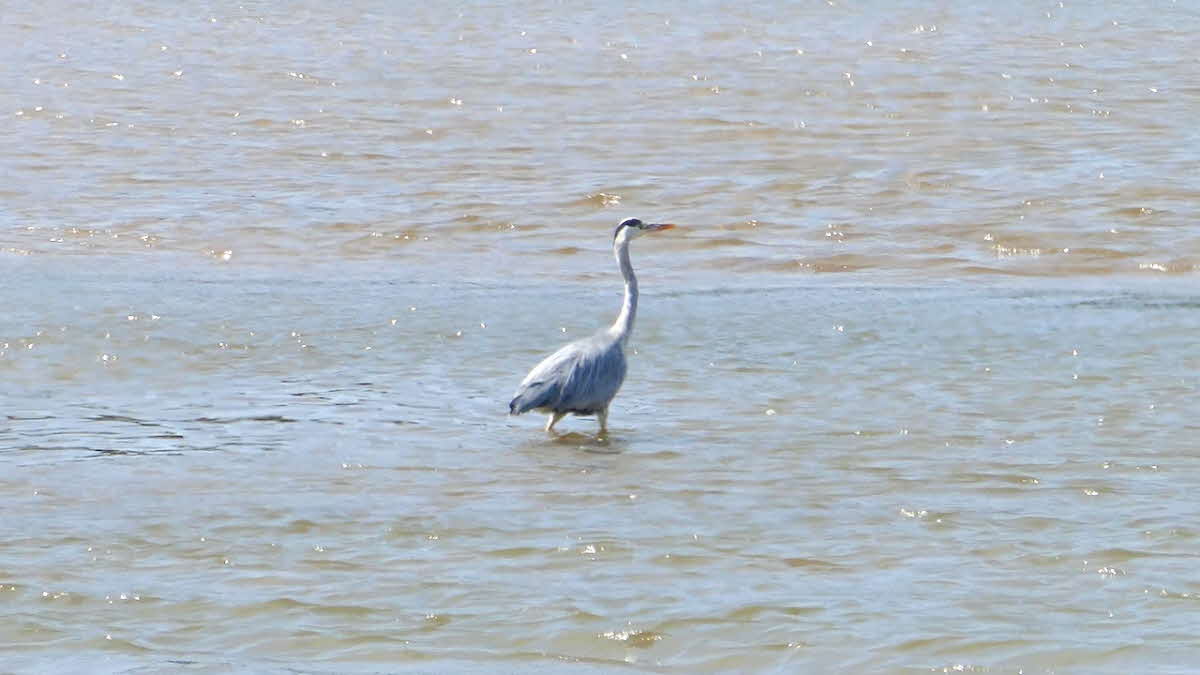 Heron feeding in Conwy estuary. Photo © Anna Haines
Once a muddy wasteland reclaimed using thousands of tonnes of rubble from the A55 tunnel construction beneath the River Conwy estuary, RSPB Conwy has been transformed into a coastal haven for wetland wildlife.
If you’re venturing to the area on a bird-spotting mission, you certainly won’t be disappointed. Over 220 species have been recorded at this man-made reserve: tidal lagoons provide a refuge for hundreds of waders and waterbirds, including great-crested grebes and egrets, while the lagoon island vegetation is managed to encourage roosting curlews, redshanks and grazing wigeons. Reed warblers seek shelter among the reedbeds in late summer, replaced by water rails in winter. And the muddy tidal banks of the estuary are valuable feeding grounds for migratory birds returning here each year from the Arctic, including lapwing, winged plover, dunlin and oystercatcher.
Swing by RSPB Conwy from Coed-Y-Llwyn Club Campsite at Blaenau Ffestiniog or Riverside Touring Park AS in Betws-y-Coed and lose yourself in birdsong amid the reedbed boardwalks and flat, wide trails that navigate this wetland wonderland.
The best time to view the lagoons from the bird hides is high tide from August to March, when the estuary pushes waders to roost and feed on the islands. Waymarked trails also skirt the estuary edge, overlooking mudflats and saltmarsh, with a backdrop of the Carneddau mountains and Conwy Castle beyond.
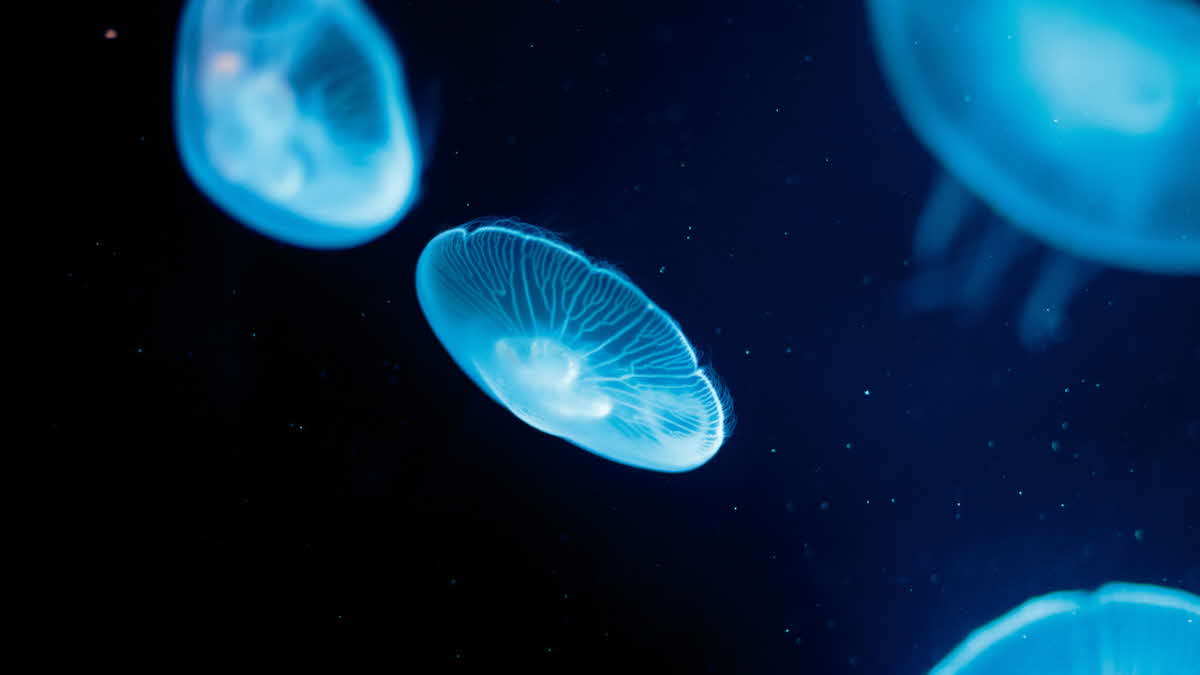 The Deep Moon ©The Deep
Weather taken a turn for the worse? Discover more about the UK’s marine biodiversity at one of these fascinating aquariums...